Selecting Core Material Suppliers: A Technical Guide for Composites
Selecting Core Material Suppliers: A Technical Guide for Composites
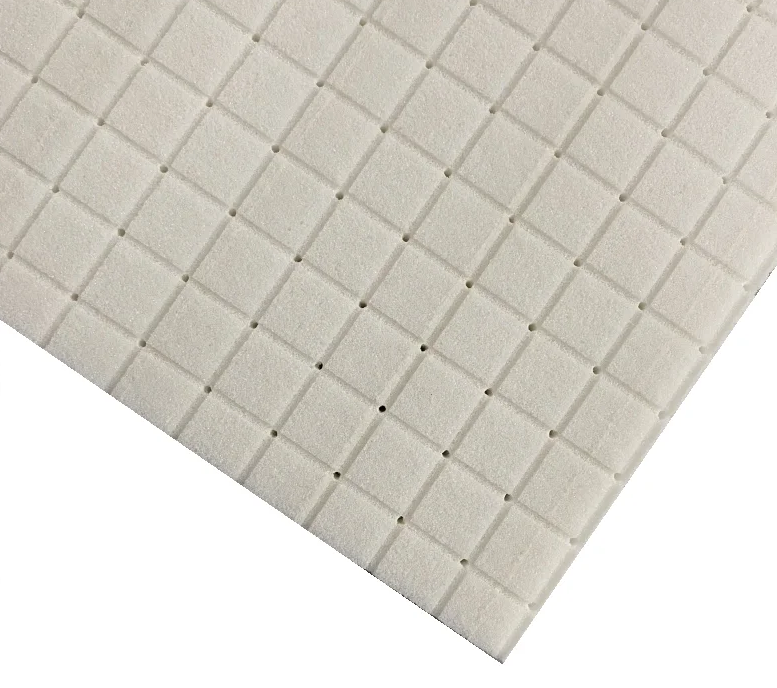
Figure: PET foam core – a recyclable and lightweight core material widely used in marine, wind energy, and transportation composites.
Introduction
In the world of advanced composites, the core material is the unsung hero that transforms a simple laminate into a lightweight, high-stiffness sandwich structure. Whether you are building yacht hulls, wind turbine blades, RV panels, or aerospace components, the choice of core material and the reliability of your core material supplier directly impact product performance, manufacturing efficiency, and total cost. This technical guide is designed for procurement engineers, composite designers, and business owners who need to evaluate and select a supplier that can consistently deliver quality core material for boat building, core material for wind turbine blades, core material for transportation panels, and more.
What Is a Core Material and Why Does It Matter?
A core material is the lightweight central layer in a sandwich panel, bonded between two skin laminates (typically fiberglass or carbon fiber). Its primary functions are to increase the panel’s moment of inertia, improve stiffness, reduce overall weight, and provide insulation. Core materials come in various forms:
- Foam cores: PVC, PET, PMI – each with distinct mechanical and thermal properties.
- Honeycomb cores: PP honeycomb, aramid honeycomb (Nomex) – offering exceptional strength-to-weight ratios.
- Flow cores / Core mats: Non-woven polyester materials that act as both core and resin distribution media during vacuum infusion.
Selecting the right core material for yacht hulls or core material for lightweight structures requires understanding the end-use environment (saltwater, UV, dynamic loads) and the manufacturing process (vacuum infusion, RTM, hand lay-up).
The Problem: Finding a Trustworthy Core Material Supplier
Procurement teams often face these challenges:
- Inconsistent quality: Batch-to-batch variations in density, thickness, or mechanical properties can ruin production runs.
- Limited product range: A single project may require multiple core types (e.g., PVC foam for high-load areas, core mat for large flat panels).
- Long lead times and unreliable logistics, especially for international buyers.
- Lack of technical support: Without guidance on material selection and process optimization, manufacturers risk costly mistakes.
- Customization needs: Many projects require ODM or OEM services, custom dimensions, or private labeling.
This guide addresses these pain points by providing a systematic framework for evaluating suppliers, using CINON Composites as a case study of a capable and certified partner.
Industry Background: Growing Demand for Lightweight Core Materials
The global composites market is expanding rapidly, driven by demand for fuel-efficient transportation, larger wind turbines, and lightweight marine vessels. According to industry reports, the core materials market is projected to grow at a CAGR of 6–8% through 2030. Key end-use sectors include:
- Marine & Yacht Building: Saltwater resistance, low water absorption, and high stiffness are critical. Cores like PVC foam and core mats are used in hulls, decks, and superstructures.
- Wind Energy: Fatigue resistance and light weight are paramount. PET foam and balsa are common in blade shells.
- Transportation: RV panels, truck bodies, and rail interiors need impact resistance and thermal insulation. PP honeycomb and core mats are popular.
- Aerospace & UAV: Ultra-lightweight, high-temperature performance demands PMI foam and aramid honeycomb.
Choosing a supplier with a broad portfolio and deep technical expertise is essential to serve these varied applications.
Solution Overview: CINON Composites as a Reliable Core Material Partner
Guangdong Cinon New Material Technology Co., Ltd (brand: CINON) is a specialized manufacturer of fiberglass reinforcements and lightweight core materials. With a 40,000 m² factory and an annual output of 1,200,000 m², CINON supplies customers in Europe, North America, and Asia-Pacific. The company holds ISO 9001:2015 (cert. 51326Q04922R053), ISO 14001:2015 (cert. ISO14001-2023-001), and ISO 45001:2018 (cert. 51326S01896R053) certifications, demonstrating a commitment to quality, environment, and occupational health.
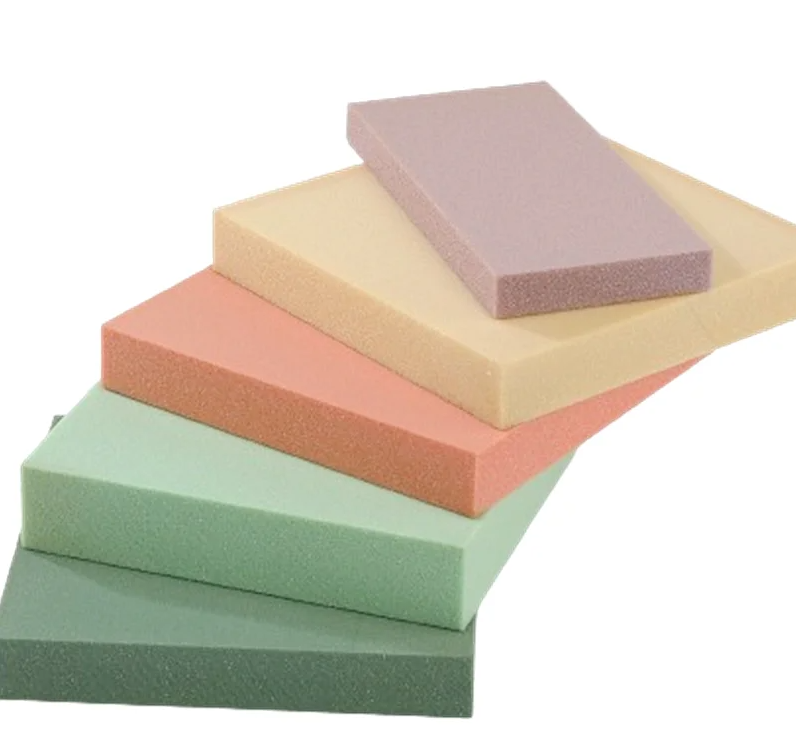
Figure: PVC foam core – high shear strength and closed-cell structure make it ideal for yacht hulls and decks.
Product Portfolio
CINON offers a comprehensive range of core materials covering nearly every composite application:
| Product | Key Features | Typical Applications |
|---|---|---|
| PET foam core (Recyclable Foam Core) | Density: 80–320 kg/m³; recyclable; good temperature resistance | Wind turbine blades, transportation panels, RV floors |
| PVC foam core (Divinycell Alternative) | Density: 45–300 kg/m³; high compressive strength; closed-cell | Boat hulls, decks, structural sandwich panels |
| PMI foam core (Rohacell Alternative) | Density: 40–130 kg/m³; high temperature resistance; excellent fatigue | Aerospace, UAV wings, motorsport |
| PP honeycomb sheet | Cell size 6–12mm; density 70–80 kg/m³; moisture resistant | RV walls, truck bodies, industrial panels |
| Nomex honeycomb (Aramid) | Cell size 1.83–5.5mm; density 32–128 kg/m³; high stiffness | Aircraft interiors, defense, radar structures |
| CM Core Mat (Soric XF / SF Alternative) | Thickness 1.5–6mm; dry weight 125–360 g/m²; resin flow channels | Boat building, transportation, general infusion structures |
| CS / CT / CX Core Materials | Polyester nonwoven; various thicknesses; Soric LRC / SF alternatives | Marine, wind, industrial composites, tooling |
This wide selection allows buyers to source multiple core types from a single supplier, simplifying procurement and ensuring consistent quality across projects.
How to Evaluate a Core Material Supplier: Step-by-Step
Step 1: Define Your Technical Requirements
List the critical parameters: density, thickness, operating temperature, mechanical load (compression, shear), and process compatibility (vacuum infusion, RTM, prepreg). For example, core material for yacht decks requires low water absorption and high shear strength, while core material for wind turbine blades demands fatigue resistance.
Step 2: Verify Certifications and Quality Control
Look for ISO 9001 and other relevant standards. CINON’s ISO 9001:2015 certification ensures systematic quality management. Additionally, check for batch traceability and performance testing. CINON performs 100% in-line inspection, including density, thickness, and weight checks, with test reports available upon request.
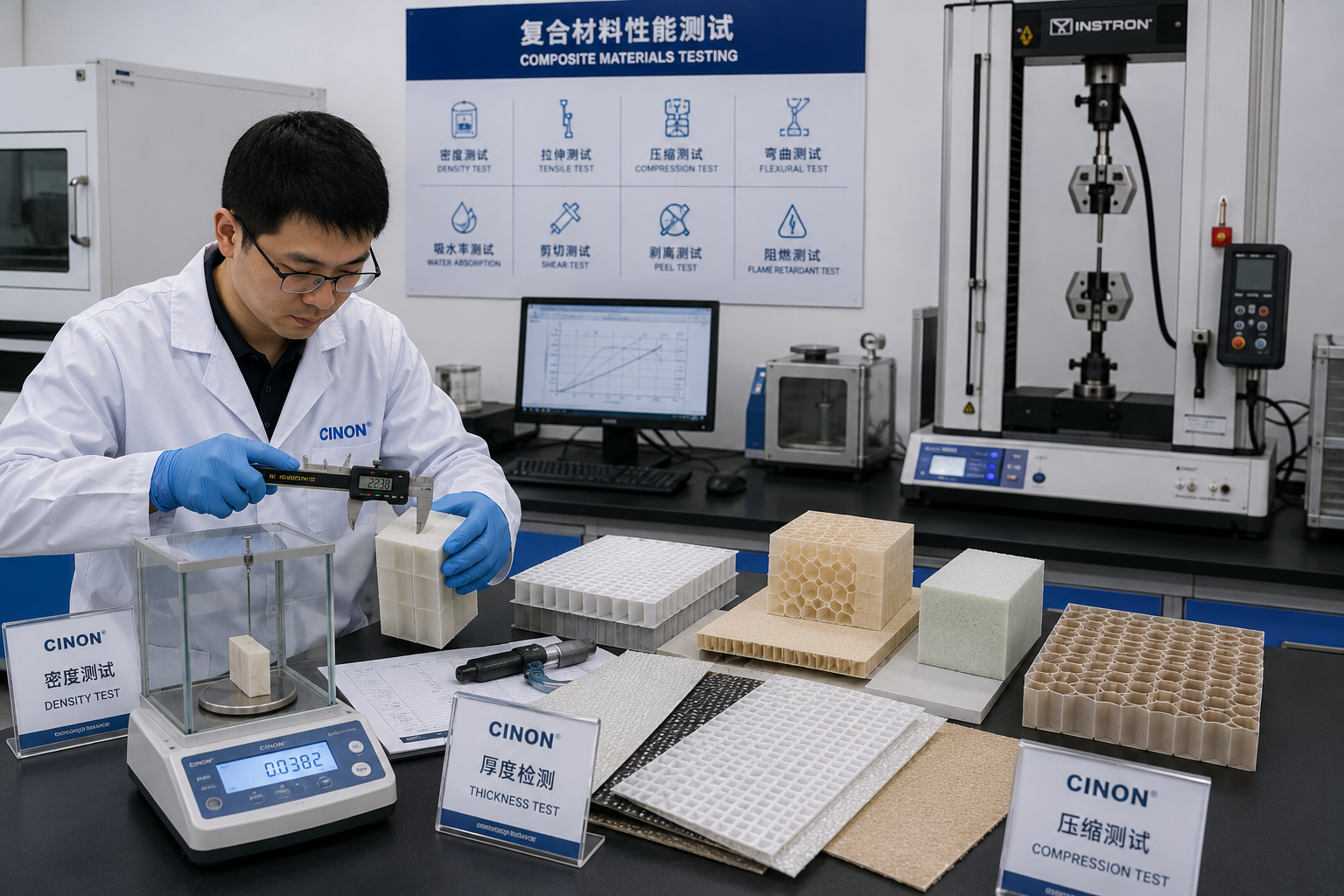
Figure: In-house density and performance verification ensures batch-to-batch consistency.
Step 3: Assess Product Range and Customization
A supplier with a wide portfolio reduces the need for multiple vendors. CINON offers ODM and customization services for core materials and fiberglass fabric, including custom dimensions, surface treatments (plain, grooved, perforated, scrim-backed), and OEM labeling. For distributors, private labeling is available (as demonstrated in the Czech and Polish customer cases).
Step 4: Evaluate Production Capability and Lead Time
Monthly capacity of 100,000 m² and a 15–30 day lead time (MOQ 1,000 m²) allow CINON to handle both standard and urgent orders. The company maintains inventory management and export-standard packaging to prevent damage during transit.
Step 5: Request Samples and Technical Support
CINON provides engineering support for material selection, process optimization, and vacuum infusion guidance. Customers can request samples to validate performance before committing to volume orders. A UK distributor case highlighted “fast lead time and reliable export logistics” as key benefits.
Use Cases: Real Projects Supplied by CINON
The following examples from CINON’s customer base illustrate successful applications across industries:
Marine & Yacht – Australia
A yacht builder in Australia used PP honeycomb sheet (product 4507) for boat building tools and materials. The project achieved smooth surface, easy wet-out, and better finish. The client ordered container quantities and highlighted the importance of material selection for long-term composite structural applications.
UAV Manufacturing – Germany
A German UAV manufacturer received PMI foam core (product 4405) for drone production. The 10-pallet project delivered ultra-lightweight structures, high stiffness, and high temperature resistance. Key highlights: fatigue resistance and low density.
RV Manufacturing – United States
An RV manufacturer used multiaxial fiberglass fabric (product 4367) and core materials for FRP panels. The 5-pallet project achieved glossy surface and uniform thickness, with low weight and anti-UV performance being critical.
Composite Distributor – United Kingdom
A UK distributor relied on CX Core Material (product 4400) for vacuum infusion composite structures. This solved their need for a reliable alternative supply, with fast lead times and dependable export logistics.
Composite Distributor – Poland & Czech Republic
Distributors in Poland and the Czech Republic ordered container quantities of PP honeycomb (product 4507) and other cores, with OEM logo customization. Monthly reorder patterns confirm strong end-user satisfaction.
Frequently Asked Questions (FAQ)
Q: What is the difference between PET foam and PVC foam?
A: PVC foam typically offers 20-40% higher compression strength, making it better for high-load areas like marine hulls. PET foam is more recyclable and cost-effective (10-20% lower price), suitable for wind energy and transportation panels where sustainability matters.
Q: Can I get custom sizes for core materials?
A: Yes. CINON provides customized dimensions, thicknesses, and surface options. Standard sheet size for honeycomb is 1220×2440 mm, but custom sizes are available upon request.
Q: What is the MOQ for core materials?
A: For most foam cores and core mats, the MOQ is 1,000 m². For fiberglass fabrics, the MOQ can be as low as 100 m². Contact CINON sales for specific product MOQ.
Q: How does CINON ensure batch consistency?
A: Each production batch undergoes density, thickness, weight, and appearance inspection. Batch numbers are traced, and test reports are provided. Pre-shipment quality checks are standard.
Q: Do you offer technical support for vacuum infusion processes?
A: Absolutely. CINON’s engineering team provides support on material selection, process optimization, and troubleshooting. This includes guidance on using Core Mats (CM, CS, CT, CX) as effective infusion cores and Soric alternatives.
Q: What are the payment and delivery terms?
A: Payment is 30% deposit in advance, 70% balance by TT before shipment. Delivery terms: FOB, CIF, EXW. Lead time is typically 15-30 days.
Conclusion: Why CINON Should Be Your Core Material Supplier
Selecting a core material supplier is a strategic decision that affects product quality, production efficiency, and supply chain resilience. CINON Composites combines a broad product portfolio, ISO-certified quality systems, substantial production capacity, and deep technical expertise to serve demanding industries from marine to aerospace. With a 40,000 m² factory, 25 R&D engineers, and a 100% export ratio, CINON is equipped to support both small prototypes and large-scale container orders.
Whether you need core material for sandwich panels, core material for vacuum infusion, or Soric XF / SF alternatives, CINON provides competitive solutions with reliable delivery and customization services.
Download the CINON Product Catalog
Get full technical specifications, product range, and case studies in our comprehensive PDF catalog.
Download NowNeed personalized assistance? Contact Waylon at [email protected] or WhatsApp +86 135-8036-3674.
Address: Building 3, No.1, viheng Lane, jinnan Second Street, Dachongkou Village, shawan Street, Panyu District, Guangzhou, China
Have Questions or Need More Details?
Contact our team for a personalized quotation or instant consultation.
Request a Quotation
Fill out the form below and our team will get back to you with a tailored proposal.
WhatsApp Direct Chat
Prefer to chat in real-time? Message us on WhatsApp for instant assistance & quick answers.
- Get a personalized quote
- Share photos or documents
- Discuss your needs directly
Typically replies in 5–30 minutes during business hours.