Fiberglass Fabric for Project-Specific Applications: Matching Materials to Marine, Wind, UAV, and Industrial Demands
Fiberglass Fabric for Project-Specific Applications: Matching Materials to Marine, Wind, UAV, and Industrial Demands
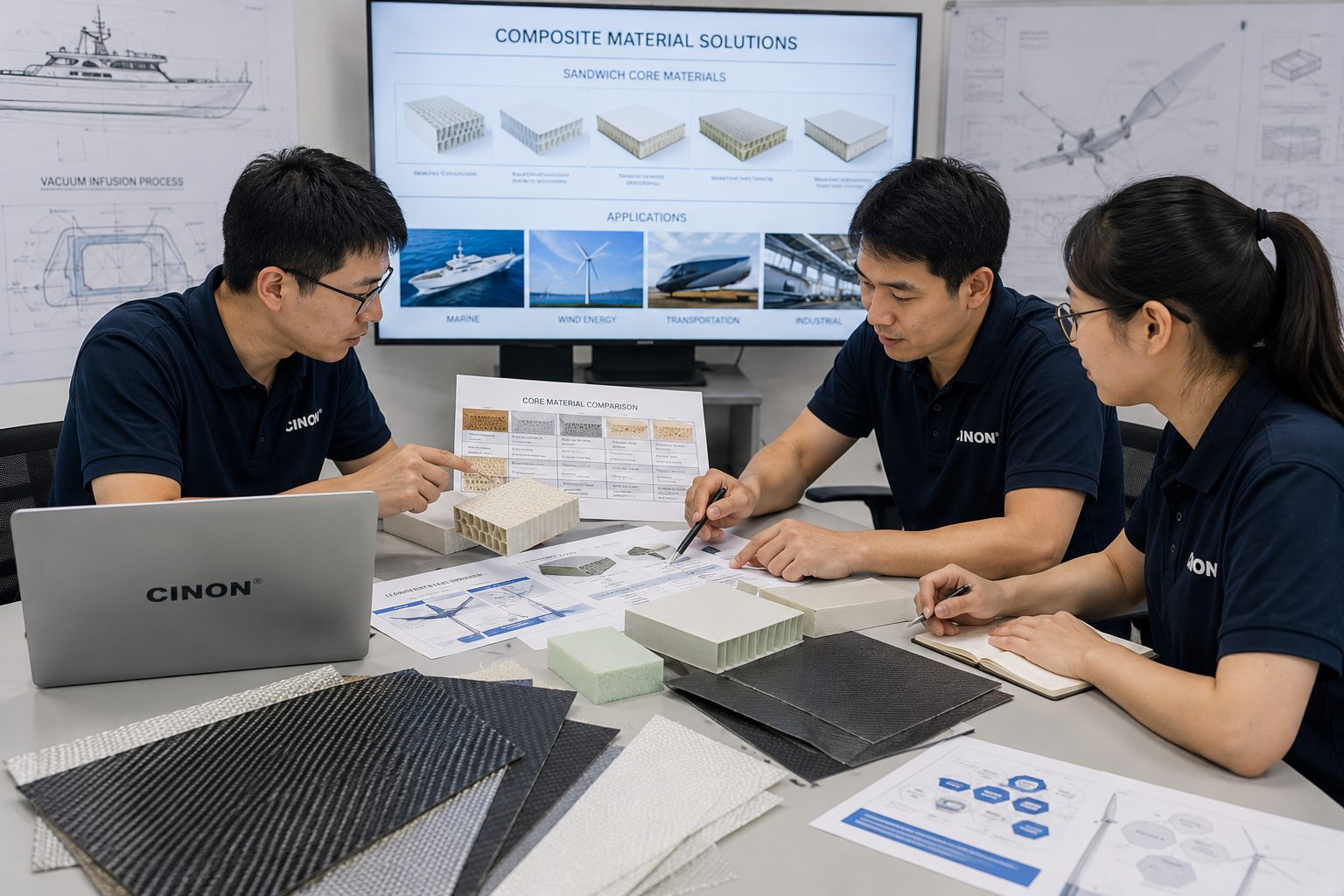
Selecting the correct fiberglass fabric for a composite project directly affects laminate performance, manufacturing efficiency, and long-term durability. CINON Composites, a specialist in fiberglass reinforcements and lightweight core materials, offers two primary fabric categories: Light Weight Fiberglass Cloth and Structural Composite Reinforcement (Multiaxial Non-Crimp Fabrics). This article provides project-specific guidance to help engineers, procurement professionals, and composite manufacturers match the right reinforcement to their application, whether building a yacht hull, a wind blade, a UAV wing, or an industrial panel.
Problem Definition
Composite designers face a wide range of fabric options without a clear decision framework. Choosing a fabric that is too heavy or has the wrong fiber orientation can lead to excess weight, poor resin flow, higher costs, or premature failure. Each project imposes constraints: processing method (hand lay-up, vacuum infusion, RTM), mechanical loading (static, dynamic, fatigue), environmental exposure (saltwater, UV, thermal cycling), and weight targets. An informed material selection process is needed to avoid costly trial-and-error.
Industry Background
Fiberglass fabric is a staple reinforcement in industries such as marine and yacht building, wind energy, transportation, sports equipment, UAV manufacturing, and industrial composites. According to CINON's application experience, vacuum infusion and RTM are increasingly preferred for structural parts due to their high fiber-to-resin ratio and repeatable quality. The shift toward lightweight structures has driven demand for both plain woven fabrics (for surface layers and thin laminates) and multiaxial non-crimp fabrics (for load-bearing laminates).
Detailed Solution: CINON Fiberglass Fabric Portfolio
Guangdong Cinon New Material Technology Co.,Ltd (CINON Composites) is a manufacturer of fiberglass reinforcements and lightweight core materials for marine, transportation, wind energy, industrial, and aerospace composite applications. CINON's product range includes two key fiberglass fabric families:
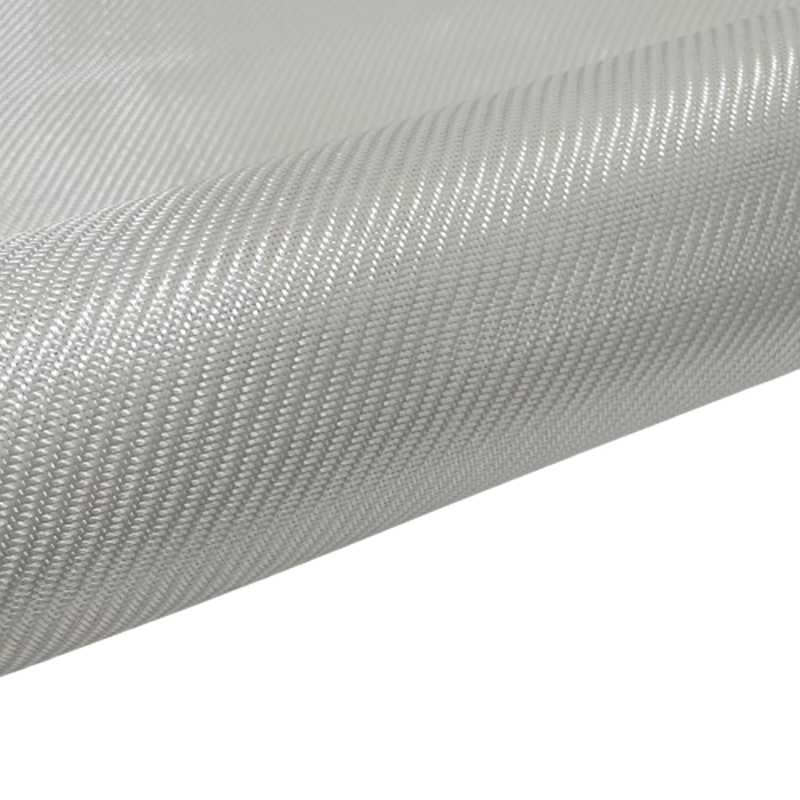
- Light Weight Fiberglass Cloth (Model: EW, Type: E-Glass Fabric) – A plain woven fabric available from 25 g/m² to 400 g/m². It is produced from E-fiberglass in widths of 1000 mm and 1010 mm. The fabric offers excellent conformability, smooth surface finish, and good resin wet-out, making it suitable for hand lay-up, vacuum infusion, and resin infusion processes. It is commonly used in surfboards, UAV skins, composite molds, sports equipment, and surface layers of marine and transportation parts.
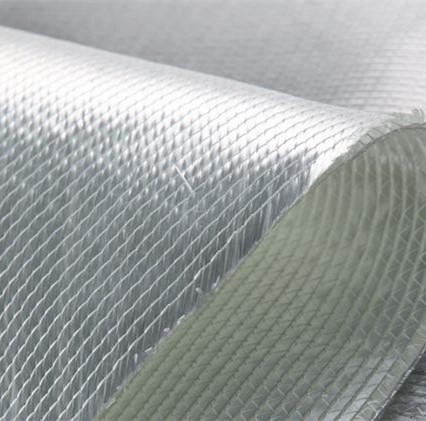
- Structural Composite Reinforcement (Model: Multiaxial Fiberglass Fabrics, Type: Non-Crimp Fiberglass Fabric) – A non-crimp fabric (NCF) available in unidirectional (0° or 90°), biaxial (0°/90° or +45°/-45°), triaxial (+45°/0°/-45° or +45°/90°/-45°), and quadraxial (0°/90°/-45°/+45°) configurations. Weight range is 400–1500 g/m² with combustible matter 2.0%–8.0% and moisture content less than 0.2%. These fabrics provide high fiber alignment, reduced crimp, and improved strength-to-weight ratio, and are suited for vacuum infusion, hand lay-up, RTM, and pultrusion. They are applied in ship hulls, wind turbine blades, automotive components, large containers, and infrastructure.
Step-by-Step Fabric Selection Guide
- Identify the primary manufacturing process – Vacuum infusion, hand lay-up, RTM, or pultrusion. Both fabric families are compatible with vacuum infusion, but the multiaxial NCF is preferred for processes requiring low crimp and high mechanical efficiency. Note: this product requires supporting equipment such as vacuum bagging systems.
- Determine mechanical requirements – Where isotropic strength is sufficient, a plain woven fabric (25–400 g/m²) can serve as surface layer or light reinforcement. For directional loads (bending, torsion, shear), select a multiaxial NCF with appropriate fiber orientation (biaxial for panels, triaxial for complex loads, quadraxial for multi-directional stress).
- Define weight and thickness limits – For thin laminates (<1mm), use light weight woven fabric (e.g., 100–200 g/m²). For structural thickness of 2–10 mm, stack multiple layers of multiaxial NCF (400–1500 g/m² per layer).
- Check environmental compatibility – E-glass fabric is inherently resistant to saltwater, UV, and most chemicals. For extreme fatigue or corrosion exposure, additional coatings or core materials may be needed.
- Consult technical support – CINON provides comprehensive support covering material selection, composite process optimization, vacuum infusion guidance, alternative material recommendations, sample evaluation, quality traceability, and global logistics coordination.
Use Cases
Marine & Yacht Building
Boat hulls, decks, and bulkheads require high stiffness, low water absorption, and saltwater resistance. CINON supplies multiaxial fiberglass fabrics (often combined with PVC foam or Core Mat) for vacuum-infused sandwich structures. Light weight woven fabric is used for smooth outer skins. Australian boat builders report smooth surface finish and excellent wet-out with CINON materials.
Wind Energy
Wind turbine blades demand fatigue resistance and dimensional stability under cyclic loads. Quadraxial NCF (0°/90°/-45°/+45°) with fiber weight 800–1200 g/m² is selected for blade shells, while unidirectional layers handle spar caps. Vacuum infusion is the standard process.
UAV & Drone Manufacturing
Ultra-lightweight structures require fabrics of 25–100 g/m². Light Weight Fiberglass Cloth is used for wing skins and fuselage panels, often paired with PMI foam core to maximize stiffness-to-weight ratio. A German UAV manufacturer uses CINON fabrics to achieve weight reduction and high temperature resistance.
Sports & Leisure – Surfboards
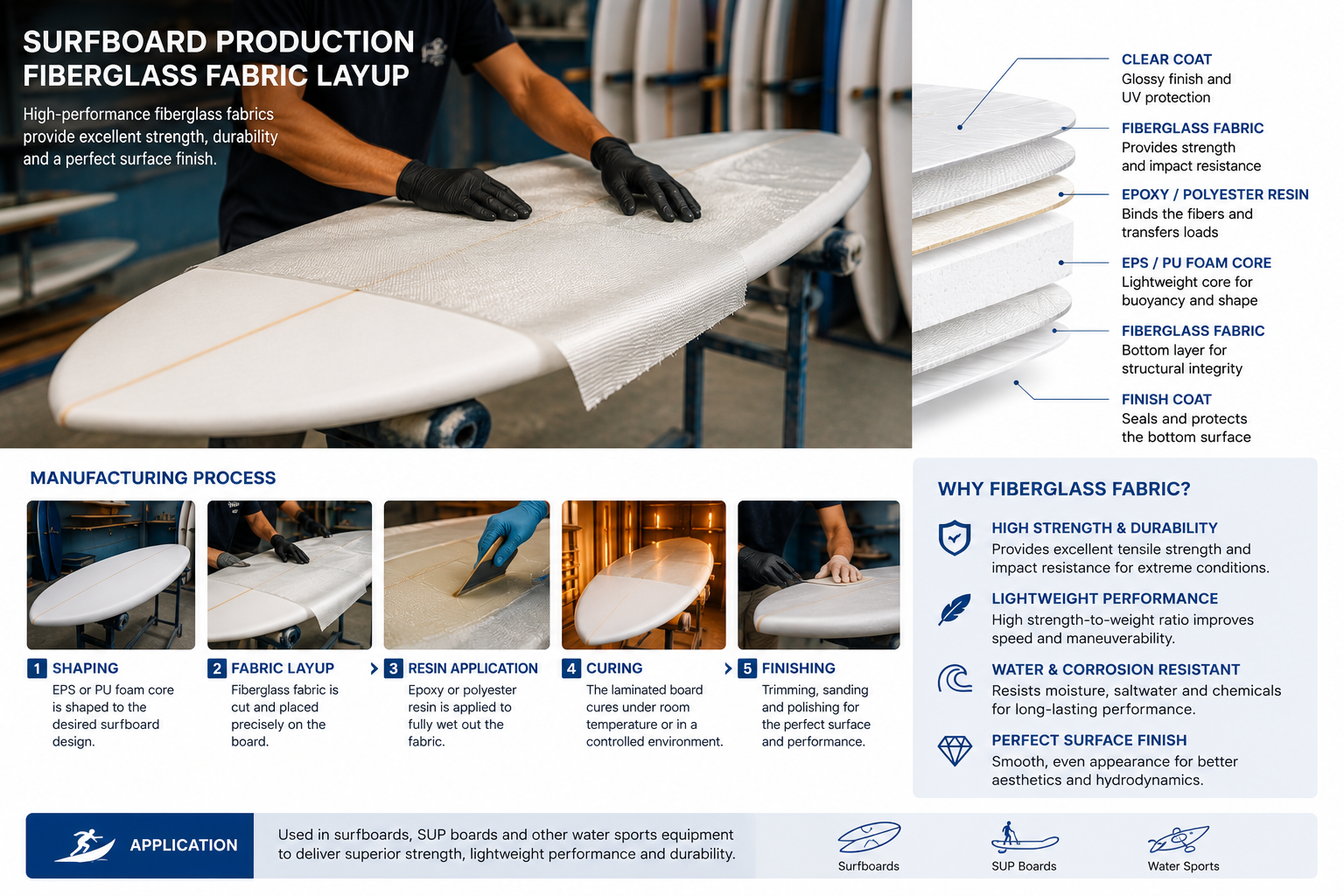
Plain woven E-glass fabric (100–200 g/m²) is the standard reinforcement for surfboards, providing a balance of flex memory, impact resistance, and lightweight performance. CINON materials have been adopted by Thai sports equipment manufacturers for container-lot orders.
Transportation Panels
Truck bodies, bus panels, and rail interiors use biaxial or triaxial NCF laminated with PET foam or PP honeycomb to reduce weight while maintaining impact resistance. A Mexican transportation panel manufacturer uses CINON's multiaxial fabric for improved corrosion resistance and adhesion with core materials.
Comparison: Woven vs. Non-Crimp Fiberglass Fabric
| Property | Light Weight Woven Fabric (Plain) | Multiaxial Non-Crimp Fabric (NCF) |
|---|---|---|
| Fiber orientation | 0°/90° (bidirectional) | Unidirectional, biaxial, triaxial, quadraxial |
| Weight range | 25–400 g/m² | 400–1500 g/m² |
| Fiber crimp | Present (reduces modulus) | Minimal (high modulus) |
| Resin wet-out | Good, easier for thin laminates | Excellent, uniform flow channels |
| Conformability | High; good for complex curves | Moderate; best for flat or gentle curves |
| Typical applications | Surface skins, thin laminates, sports equipment | Structural hulls, wind blades, load-bearing panels |
| Process compatibility | Hand lay-up, vacuum infusion, RTM | Vacuum infusion, RTM, pultrusion |
FAQ
- Are CINON fiberglass fabrics suitable for marine applications requiring compliance with classification society rules?
CINON fiberglass fabrics are used by boat builders in saltwater environments and are compatible with vacuum infusion and RTM processes that meet industry standards for marine laminates. The materials are designed to provide low water absorption and corrosion resistance. For specific classification requirements, CINON offers technical support to review material selection and process parameters. (This product requires supporting equipment such as vacuum bagging systems.) - What fabric types does CINON offer for vacuum infusion?
CINON offers both Light Weight Fiberglass Cloth (plain woven, 25–400 g/m²) and Multiaxial Non-Crimp Fabrics (bidirectional, triaxial, quadraxial, 400–1500 g/m²). Both are designed for vacuum infusion. The multiaxial NCF is preferred for structural laminates requiring high fiber alignment and reduced resin consumption, while the woven fabric is used for surface layers or thin skins. - What are the typical MOQ and lead time for custom multiaxial fabrics?
According to CINON's production capacity, the standard MOQ is 1000 m² per item, and lead time is 15–30 days depending on order complexity and current production schedule. Monthly capacity is 100,000 m² across all fiberglass products. - Can I order small samples to test before committing to a full order?
Yes. CINON supports sample evaluation as part of its technical service. Customers can request fabric swatches or small cut lengths via email or WhatsApp. The sample process helps verify wet-out, surface finish, and compatibility with existing resin systems. - How can I get a quote for my specific project?
To receive a tailored quotation, contact CINON directly with project details: target application, fabric type, weight, width, quantity, and required delivery timeline. You can reach Waylon at [email protected] or via WhatsApp +86 135-8036-3674. A technical support team can assist with material selection and process recommendations.
Conclusion
Selecting the right fiberglass fabric requires aligning mechanical demands, processing method, and environmental conditions with the fabric's weight, construction, and fiber orientation. CINON Composites provides two high-performance fabric families—light weight woven cloth (25–400 g/m²) and multiaxial non-crimp fabrics (400–1500 g/m²)—that cover a wide spectrum of marine, wind, UAV, transportation, sports, and industrial applications. With a 40,000 m² factory, 25 R&D engineers, and comprehensive after-sales support, CINON is positioned to assist composite manufacturers from prototype to mass production.
Download the full product catalog for detailed specifications: CINON Composites Catalog.
Have Questions or Need More Details?
Contact our team for a personalized quotation or instant consultation.
Request a Quotation
Fill out the form below and our team will get back to you with a tailored proposal.
WhatsApp Direct Chat
Prefer to chat in real-time? Message us on WhatsApp for instant assistance & quick answers.
- Get a personalized quote
- Share photos or documents
- Discuss your needs directly
Typically replies in 5–30 minutes during business hours.