How to Choose the Right Core Material for Marine, Wind, and Transportation Composite Projects
How to Choose the Right Core Material for Marine, Wind, and Transportation Composite Projects
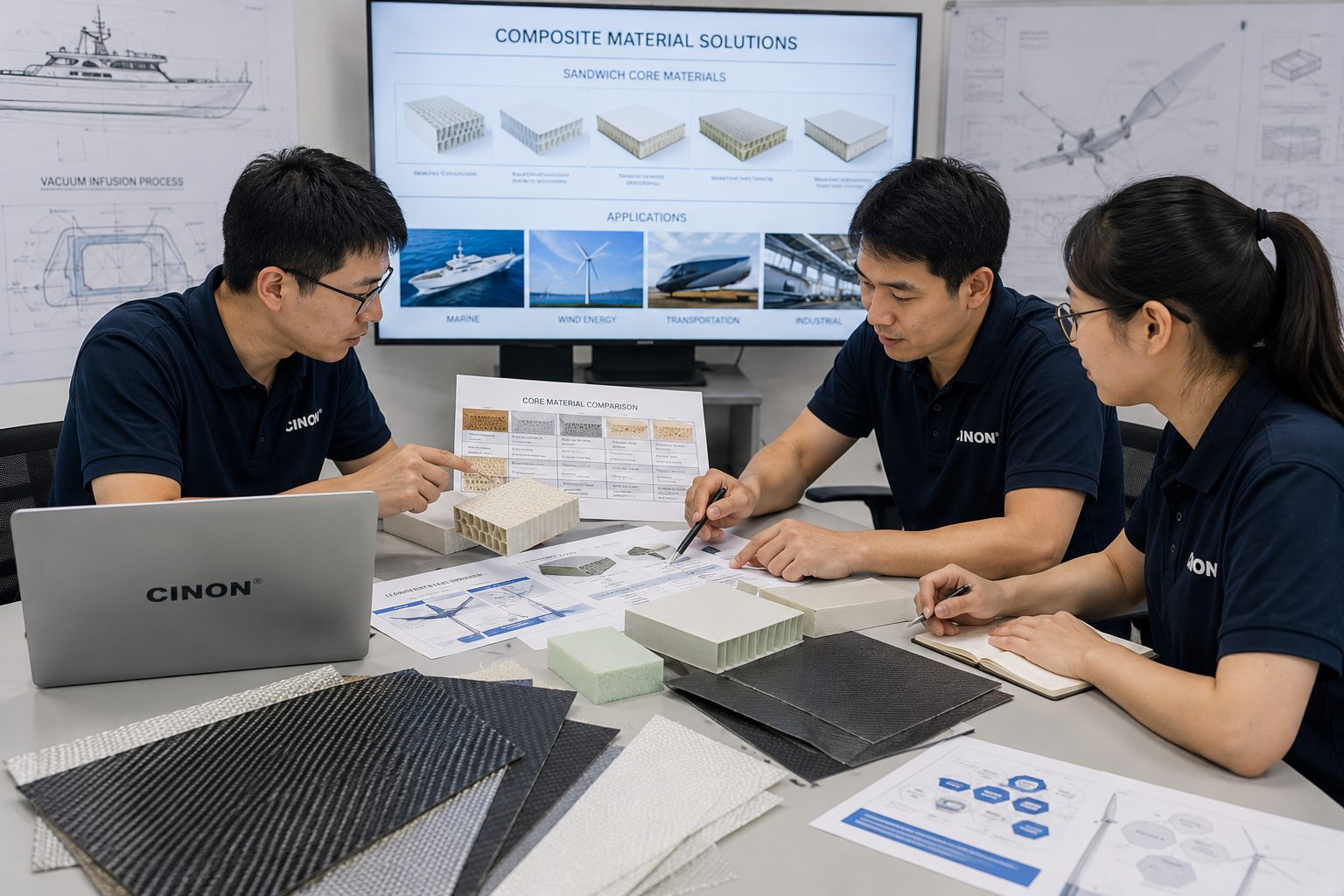
Core material selection is one of the most critical decisions in composite sandwich panel design. The right core determines weight, stiffness, fatigue life, and manufacturability. Whether you are building a yacht hull, a wind turbine blade, or an RV sidewall, the choice must align with mechanical loads, environmental exposure, and production process. This guide walks through the decision framework using CINON Composites’ full core material portfolio and real-world case studies.
Problem Definition
Composite engineers and procurement teams often face a fragmented market: PVC foam for marine, PET for wind, Core Mat for thin laminates, honeycomb for aerospace. Without a structured comparison, mismatched cores lead to over-engineering, process failures, or budget waste. The challenge is to map application requirements to the optimal core type and source a reliable partner who can supply consistent quality across projects.
Industry Background
The global core materials market was valued at USD 4.19 billion in 2024, driven by wind energy and aerospace demand. The marine structural core materials segment alone reached USD 120.4 million in 2024, with PVC foam remaining dominant due to moisture resistance. Wind turbine blade composite materials reached USD 7.045 billion in 2024, and the RV composite panels market is projected at USD 3.8 billion in 2025. These growing markets demand core materials that balance performance, cost, and sustainability.
Detailed Solution: CINON Composites Core Material Portfolio
Guangdong Cinon New Material Technology Co., Ltd (CINON Composites) is a lightweight core material and fiberglass reinforcement supplier serving marine, wind energy, transportation, aerospace, and industrial composite applications. With a 40,000 m² factory, 25 engineers, and an annual output of 1,200,000 m², CINON supplies five major core categories:
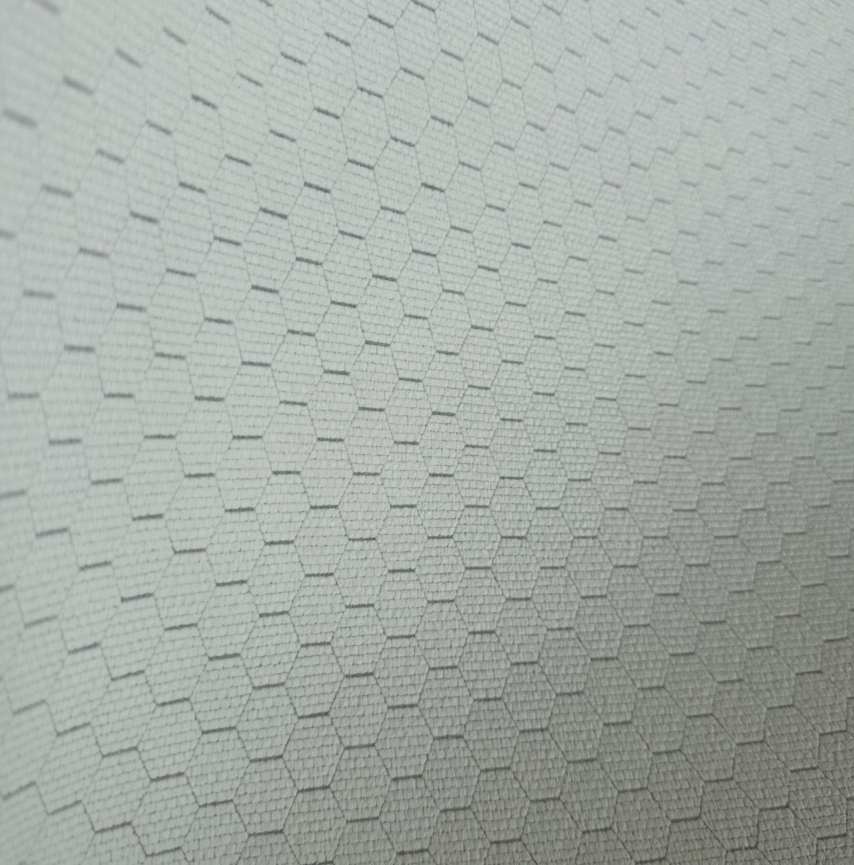
- Core Mat Series (CM, CT, CS, CX) – Polyester non-woven infusion cores that act as both core and flow medium. CM: 1.5–6mm, up to 175℃; CT: 1.5–3mm, 180℃ (thin flow layer); CS: 2–3mm, 170℃ (general purpose); CX: 1.5–3mm, 180℃ (Soric LRC alternative).
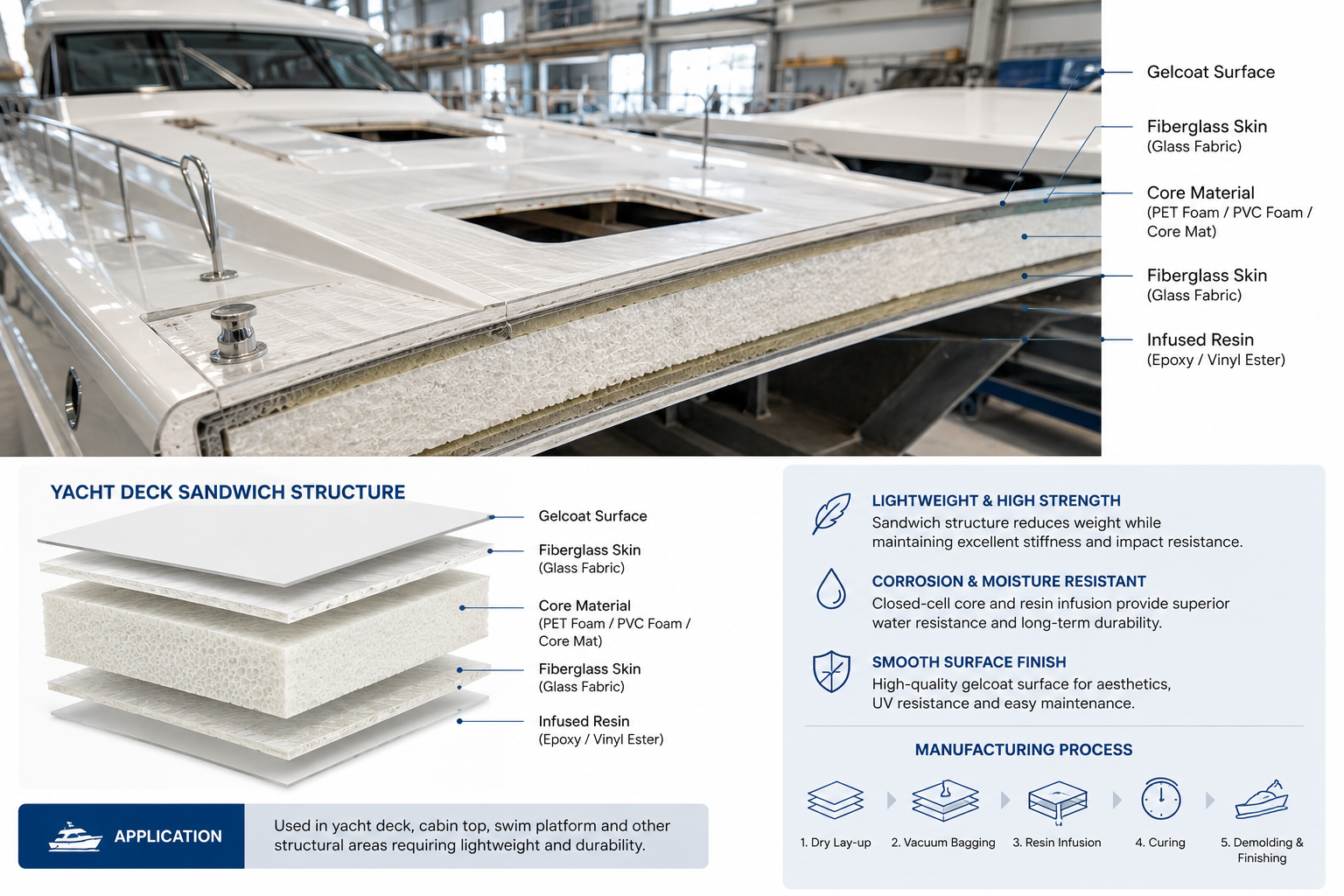
- PVC Foam Core – Crosslinked closed-cell foam, densities 45–300 kg/m³, thickness 1–80 mm. Used in boat hulls, decks, wind blades.
- PET Foam Core (Recyclable) – Densities 80–320 kg/m³. Recyclable alternative for marine, wind, and transportation.
- PMI Foam Core – 40–130 kg/m³. Autoclave-compatible, used in aerospace, UAVs, and motorsport.
- PP Honeycomb Sheet – 5–100mm thick, 70/80 kg/m³. Thermoplastic, impact-resistant.
- Nomex Honeycomb (Aramid) – 1.83–5.5mm cell, 32–128 kg/m³, working temp -60–180℃.
Step-by-Step Selection Breakdown
- Define Mechanical & Environmental Requirements – Load type (static/dynamic), water exposure, chemical resistance, temperature range.
- Identify Manufacturing Process – Vacuum infusion, RTM, prepreg, hand lay-up. Core Mat series integrates resin flow channels; PMI and PVC foams suit prepreg/autoclave.
- Match Core Properties – Shear strength, density, closed-cell vs open-cell, thickness range. Example: PVC (45–300 kg/m³) for marine structural; PET (80–320 kg/m³) for recyclable requirements.
- Select CINON Product – Use the comparison table below as a quick-reference guide.
- Validate with Sample – CINON offers sample evaluation with 100% quality testing and technical support.
Use Cases from Verified Projects
| Application | CINON Products Used | Client Region | Key Result |
|---|---|---|---|
| Boat hulls & decks (marine) | CM Core Mat, PET foam, PVC foam | Australia | Smooth surface, easy wet-out, reduced resin consumption |
| UAV wings & structures | PMI foam, CT Core Mat, fiberglass | Germany | Ultra-lightweight, high stiffness |
| RV sidewalls & roofs | PP honeycomb, PET foam, fiberglass | USA | Low weight, UV resistance, uniform thickness |
| General infusion structures | CS, CX Core Mat, CT | United Kingdom | Alternative supply with fast lead time |
Comparison Table: CINON Core Material Options
| Core Type | Density Range | Thickness Range | Max Process Temp | Primary Applications |
|---|---|---|---|---|
| CM Core Mat | 125–360 g/m² dry | 1.5–6 mm | 175℃ | Boat building, wind blades, transport panels |
| CT Lightweight Infusion Core | 90–160 g/m² dry | 1.5–3 mm | 180℃ | Thin laminates, surface finish improvement |
| CS General Purpose Core | 130–170 g/m² dry | 2–3 mm | 170℃ | Marine, industrial composites, RV |
| CX Infusion Core (Soric LRC alt) | 120–220 g/m² dry | 1.5–3 mm | 180℃ | Marine, wind, automotive, aerospace |
| PVC Foam Core | 45–300 kg/m³ | 1–80 mm | N/A (foam) | Marine hulls, decks, wind, defense |
| PET Recyclable Foam | 80–320 kg/m³ | N/A | N/A | Wind, marine, transportation, renewable energy |
| PMI Foam Core | 40–130 kg/m³ | N/A | N/A | Aerospace, UAV, motorsport |
| PP Honeycomb | 70–80 kg/m³ | 5–100 mm | N/A | RV panels, truck bodies, construction |
| Nomex Honeycomb (Aramid) | 32–128 kg/m³ | 2440×1220mm | 180℃ | Aircraft interiors, helicopter panels, racing yachts |
Frequently Asked Questions
- What is the best core material for boat hulls subject to saltwater exposure?
PVC foam core (45–300 kg/m³) is widely used for marine structures due to its closed-cell structure, low water absorption, and high shear strength. CINON PVC foam is designed as a Divinycell alternative and supports vacuum infusion, RTM, and hand lay-up. - Can CINON core materials replace Soric XF or Soric SF?
Yes. CINON CX Core Material (1.5–3mm, 180℃ max temp) serves as a Soric LRC alternative. For SF-type fine hexagon cell applications, CT Core Material provides thin flow layer with improved resin distribution and reduced print-through. - Which core offers the best strength-to-weight ratio for wind turbine blades?
PET foam (80–320 kg/m³) combines recyclability, high strength-to-weight ratio, and fatigue resistance, making it suitable for blade shells. PMI foam is preferred for spar caps requiring high temperature resistance. - What is the budget range for PP honeycomb vs foam core for RV panels?
PP honeycomb sheets (70–80 kg/m³) offer a cost-effective, lightweight alternative to plywood and foam cores in RV construction, with good impact resistance and moisture resistance. Custom sizes and surface options (PP nonwoven, fiberglass skin) allow cost tailoring. - How can I evaluate CINON core materials before committing to volume?
CINON supports sample evaluation with a MOQ of 1000 m² for production orders and a typical lead time of 15–30 days. Technical support covering material selection, process optimization, and vacuum infusion guidance is provided via email, WhatsApp, and online meetings. Request a sample or quote today.
Conclusion
Selecting the optimal core material for marine, wind, or transportation composites requires matching project-specific loads, environment, and production process to a reliable supplier. CINON Composites offers a complete range – from Core Mat series to PVC, PET, PMI foams and honeycomb – backed by a 40,000 m² factory, 25 R&D engineers, and export to Europe, North America, and Asia-Pacific. Use the selection framework in this guide to narrow your options, and contact CINON for technical support and sample evaluation. Download the full product catalog to review all specifications.
Have Questions or Need More Details?
Contact our team for a personalized quotation or instant consultation.
Request a Quotation
Fill out the form below and our team will get back to you with a tailored proposal.
WhatsApp Direct Chat
Prefer to chat in real-time? Message us on WhatsApp for instant assistance & quick answers.
- Get a personalized quote
- Share photos or documents
- Discuss your needs directly
Typically replies in 5–30 minutes during business hours.