Planning Your 2026–2027 Fiberglass Fabric Supply: A Long-Term Sourcing Strategy for Marine, Wind & UAV Builders
Planning Your 2026–2027 Fiberglass Fabric Supply: A Long-Term Sourcing Strategy for Marine, Wind & UAV Builders
Procuring fiberglass fabric for a multi-year production program is not a single purchase order. It is a supply relationship that must deliver consistent specifications, repeatable quality, responsive technical support, and predictable logistics. This article explains how composite manufacturers can move from spot buying to a long-term fiberglass fabric supply model, and what to verify before committing to a supplier for marine, wind energy, UAV, and industrial applications.
The reference example throughout this guide is Guangdong Cinon New Material Technology Co., Ltd (CINON Composites), a manufacturer of fiberglass reinforcements and lightweight core materials for composite structures. CINON is used to demonstrate the production capacity, quality controls, and procurement conditions that matter when the buying stage reaches Decision and Execution.
Why Long-Term Fiberglass Fabric Procurement Is Different from Spot Buying
At the Decision and Execution stage, buyers have already selected the material family. The remaining questions are not about fabric types. They are about continuity: can the supplier hold width, weight, weave, and finish across multiple batches? Can the factory respond when a production line changes from hand layup to vacuum infusion? Can the supplier deliver repeat orders without constant requalification?
Common risks include incorrect material selection, product specification deviation, performance inconsistency, and transportation damage. Each of these risks can delay a hull layup, a blade mold, or a UAV fuselage program. Therefore, long-term sourcing must be built on documented controls rather than on price conversations.
Fiberglass Fabric Demand Is Expanding Across Marine, Wind, and Industrial Sectors
The global fiberglass fabric market was valued at USD 14.01 billion in 2024 and is projected to grow to USD 25.65 billion by 2033, according to Grand View Research. Asia Pacific accounted for 41.61% of market revenue in 2024, supported by infrastructure and renewable energy projects. Within wind energy, the fiberglass fabric segment is expected to grow at a CAGR of 8.5% from 2025 to 2033, the highest among application segments.
Woven fiberglass fabrics captured 48.62% of market revenue in 2025, driven by their role in yacht hulls and automotive panels, based on Mordor Intelligence data. The marine fiberglass resin market is projected to reach USD 4.23 billion by 2033, indicating sustained demand for fiberglass fabric reinforcements for ship hulls and decks. Wind turbine blades account for roughly 42.5% of fiberglass usage within the wind energy sector.
These trends explain why buyers increasingly treat fiberglass fabric as a strategic procurement category. A supply interruption in a growing market can quickly become a production crisis.
What a Long-Term Fiberglass Fabric Supplier Should Provide
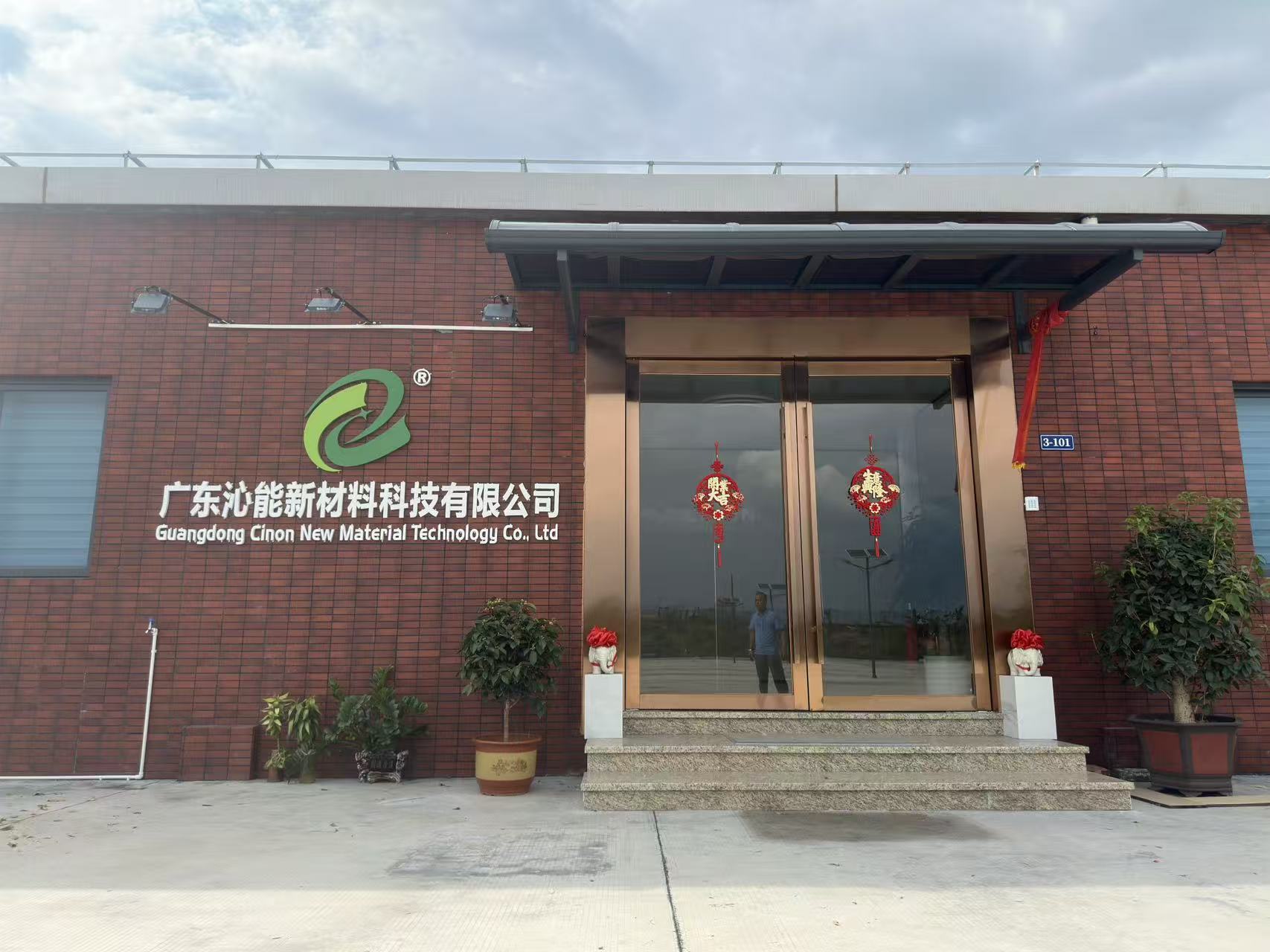
CINON Composites, established in 2022, operates a 40,000 square meter facility in Guangzhou, China. The company reports a monthly production capacity of 100,000 square meters and an annual output of 1,200,000 square meters. A 25-engineer R&D team supports customers across Europe, North America, and Asia-Pacific, and 100% of production is exported.
The product range covers fiberglass fabrics, biaxial fabrics, multiaxial non-crimp fabrics, PET foam core, PVC foam core, PMI foam core, Core Mat, PP honeycomb, and aramid honeycomb. This combination allows buyers to source reinforcement and core materials from one supplier, which simplifies qualification and long-term inventory management.
Light Weight Fiberglass Cloth
The Light Weight Fiberglass Cloth is an E-glass plain woven fabric available in widths of 1000 mm and 1010 mm, with weights from 25 to 400 g/m². It is suitable for marine and yacht building, surfboard manufacturing, UAV and drone manufacturing, sports equipment, industrial composites, composite tooling, wind energy, and transportation. Builders use this cloth for surface layers, repair laminates, and low-weight skins where conformability is required.
Structural Composite Reinforcement: Multiaxial Fiberglass Fabrics
The Structural Composite Reinforcement from CINON is a non-crimp fiberglass fabric family. It is available in unidirectional (0° or 90°), biaxial (0°/90° or +45°/−45°), triaxial (+45°/0°/−45° or +45°/90°/−45°), and quadriaxial (0°/90°/−45°/+45°) architectures. Weight ranges from 400 to 1500 g/m². Combustible matter is controlled at 2.0%–8.0%, and moisture content is less than 0.2%. These fabrics are designed for vacuum infusion, hand layup, extrusion, RTM, and VARTM processes, and are used in ship hulls, wind turbine blades, automotive components, sports equipment, and large containers.
Supply Terms and Quality Controls
CINON supports FOB, CIF, and EXW delivery terms. Payment is normally 30% deposit in advance, with 70% balance by T/T before shipment. Pre-shipment tests and quality test reports are part of the acceptance process.
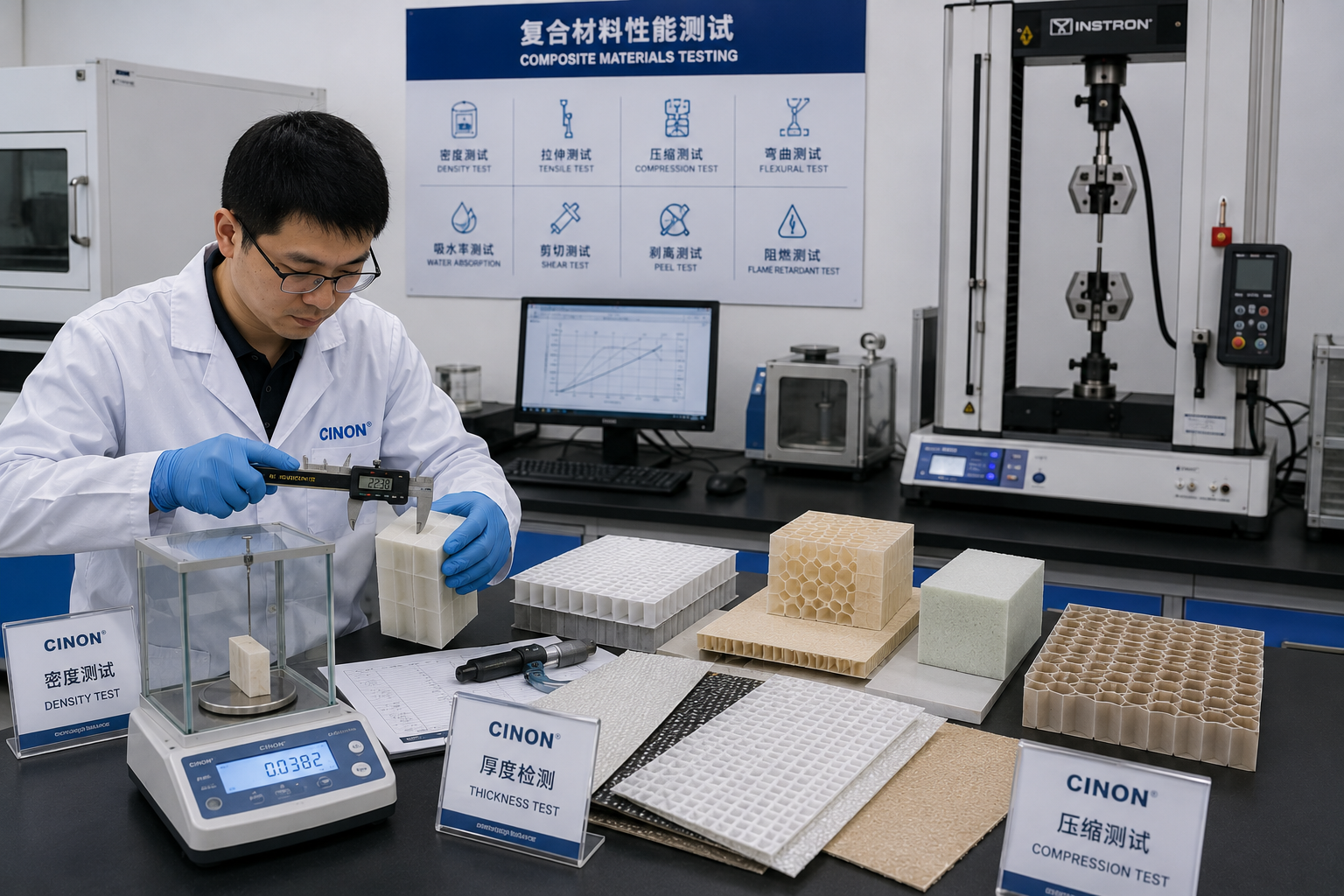
Before production, all dimensions, thickness, density, roll length, width, and weight are confirmed. First-piece inspection is conducted before mass production. Each production batch undergoes density, thickness, weight, and appearance inspection, and test reports are available upon request. These controls correspond directly to the risks that cause problems in long-term composite manufacturing.
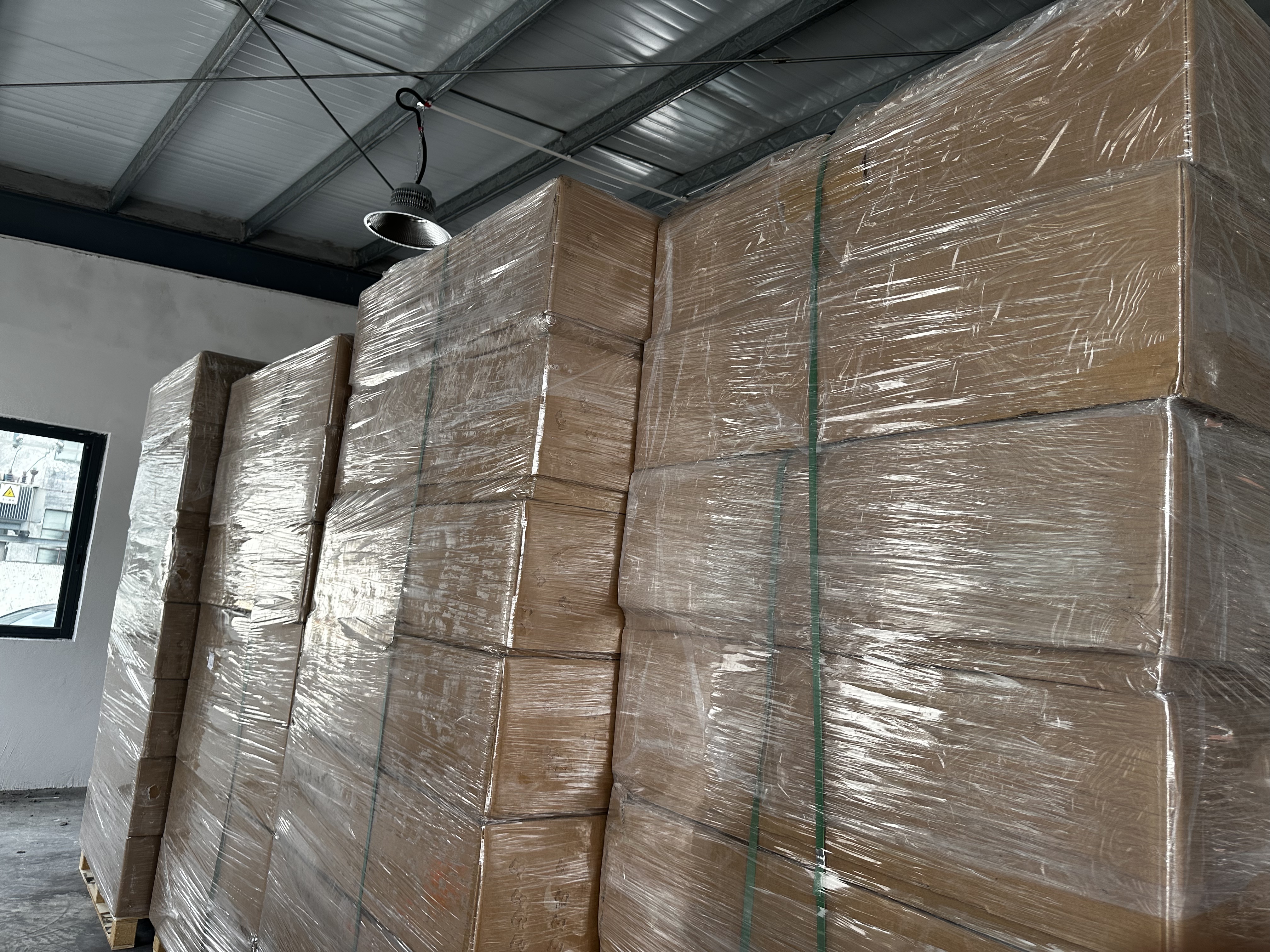
For transportation, products are packed with reinforced pallets, moisture-proof wrapping, corner protection, and export-standard packaging. Packing sizes are designed to fit container dimensions. Typical lead time is 15 to 30 days.
Step-by-Step Framework for Building a Long-Term Fiberglass Fabric Supply
- Define the laminate and process. Determine whether the part will be produced by hand layup, vacuum infusion, RTM, or VARTM. This decides whether woven roving or multiaxial non-crimp fabric is the base reinforcement.
- Select the fabric architecture. Use straight-fiber multiaxial fabrics for structural laminates and lightweight woven cloth for skins, repair, and tooling surfaces.
- Use technical evaluation support. CINON provides engineering support to recommend suitable core materials, fiberglass reinforcements, and manufacturing processes before order confirmation.
- Confirm specifications in writing. Width, weight, roll length, density, weave, and finish must be agreed before production starts.
- Inspect the first piece. First-piece inspection before mass production catches specification deviation early.
- Run batch verification. Each batch is checked for density, thickness, weight, and appearance, with test reports available on request.
- Plan export packaging. Reinforced pallets, moisture-proof wrapping, and corner protection reduce transportation damage.
- Establish a framework agreement. Use forecast-based scheduling with a 15-to-30-day lead time to align deliveries with production windows.
Fiberglass Fabric Use Cases Across Marine, Wind, UAV, and Industrial Programs
Fiberglass Fabric for Boat Building and Yacht Hulls
Boat builders use woven cloth for exterior surface layers and multiaxial fabrics for structural laminates in hulls and decks. The high resin impregnation rate of non-crimp fabrics reduces energy consumption during lamination and supports vacuum infusion of large hull sections.
Fiberglass Fabric for Vacuum Infusion and VARTM
Multiaxial fiberglass fabrics are the primary reinforcement in vacuum infusion and VARTM because their straight fiber architecture improves resin flow and produces laminates with fewer dry spots. CINON’s 400–1500 g/m² multiaxial range fits blade shells, boat hulls, and industrial panels.
Fiberglass Fabric for Wind Blades and Wind Energy
Wind blade manufacturing demands consistency in fiber orientation and weight. Unidirectional and biaxial non-crimp fabrics are widely used in spar caps, shear webs, and blade skins. The wind energy segment’s high growth makes supplier capacity and batch verification critical.
Fiberglass Fabric for Marine Repair
For repair patches and re-lamination, lightweight E-glass cloth provides conformability and low added weight. The 25–400 g/m² woven cloth range is practical for fast repairs on hulls, decks, and internal structures.
Fiberglass Fabric for Surfboards and UAVs
Surfboard and UAV manufacturers require a tight fabric weight tolerance and a smooth surface finish. Lightweight woven cloth is the standard choice for skin laminates over foam cores.
Fiberglass Fabric for Automotive Parts, Composite Molds, and Structural Reinforcement
Automotive components, composite molds, and industrial reinforced structures use multiaxial fabrics for strength-to-weight performance. When combined with PET foam, PVC foam, or honeycomb cores, the same fabric family supports sandwich panels and lightweight floor panels.
Comparison: Multiaxial Fabric vs Woven Roving, and Fiberglass vs Carbon Fiber
The following tables compare the two material decisions that appear most often in fiberglass fabric procurement.
| Criterion | Fiberglass Multiaxial Fabric | Woven Roving |
|---|---|---|
| Fiber orientation | Straight, engineered layers | Crimped, interlaced |
| Structural efficiency | Up to 20–30% higher laminate performance depending on lay-up design | Baseline |
| Material cost | Generally higher cost | Generally lower cost |
| Labor | Reduces labor requirements | Typically more labor for equivalent performance |
| Resin impregnation | Higher resin impregnation rate and less energy consumption during lamination | Lower flow efficiency |
| Maintenance | Less post-finish correction and lower long-term repair cost | More post-finish work expected |
| Best for | Wind energy, marine, structural composites | General-purpose laminates |
| Criterion | Fiberglass Fabric | Carbon Fiber |
|---|---|---|
| Stiffness | Baseline | 2–4x higher stiffness |
| Material cost | 3–5x lower material cost | 12–15x the price of glass fiber |
| Impact resistance | Better impact resistance | Not stated in source data |
| Repair and maintenance | Stable long-term performance with cheaper repair and maintenance cost | Not stated in source data |
| Mass production energy | Lower overall production energy consumption | Not stated in source data |
| Best for | Marine, industrial, construction | Aerospace, racing, high-performance structures |
FAQ
Does CINON provide test reports and specification verification for fiberglass fabric orders?
CINON conducts batch-level density, thickness, weight, and appearance inspections, and test reports are available upon request. Before mass production, dimensions, thickness, density, roll length, width, and weight are confirmed, and first-piece inspection is carried out.
Can CINON supply fiberglass fabric for marine, wind, UAV, and industrial projects under one long-term agreement?
Yes. CINON is a manufacturer of fiberglass reinforcements and lightweight core materials, with a 40,000 square meter facility, monthly production capacity of 100,000 square meters, and annual output of 1,200,000 square meters. The product range includes lightweight E-glass cloth, multiaxial non-crimp fabrics, PET/PVC/PMI foam cores, Core Mat, PP honeycomb, and aramid honeycomb.
How do fiberglass fabric prices compare with carbon fiber and woven roving?
Fiberglass fabric is significantly lower cost than carbon fiber: the price of carbon fiber is 12 to 15 times that of glass fiber, while fiberglass offers 3 to 5 times lower material cost. Compared with woven roving, multiaxial fabric is generally higher cost but reduces labor requirements and can provide up to 20 to 30 percent higher laminate performance depending on lay-up design.
Can buyers validate CINON fiberglass fabric before committing to volume production?
CINON’s pre-production process includes specification confirmation and first-piece inspection, supported by engineering evaluation before order confirmation. For sample-level validation, buyers can contact CINON at [email protected] or WhatsApp +86 135-8036-3674 to discuss the project.
What is CINON’s lead time for fiberglass fabric orders?
CINON’s typical lead time is 15 to 30 days. Products are packed with reinforced pallets, moisture-proof wrapping, and corner protection, and packing sizes are designed to fit container dimensions.
Conclusion
Long-term fiberglass fabric supply is built on verified capability, documented quality, and process alignment. CINON offers the production capacity, product range, and risk controls needed for marine, wind, UAV, and industrial programs. For complete product information and specifications, download the CINON catalog. To discuss your 2026–2027 supply plan, contact [email protected] or WhatsApp +86 135-8036-3674.
Need a reliable fiberglass fabric supply partner for your next production cycle? Request a quote or discuss your material specification with CINON.
[email protected] | Tel: +86 186-2098-8848
Have Questions or Need More Details?
Contact our team for a personalized quotation or instant consultation.
Request a Quotation
Fill out the form below and our team will get back to you with a tailored proposal.
WhatsApp Direct Chat
Prefer to chat in real-time? Message us on WhatsApp for instant assistance & quick answers.
- Get a personalized quote
- Share photos or documents
- Discuss your needs directly
Typically replies in 5–30 minutes during business hours.