Choosing Composite Core Materials: PET vs PVC vs CM vs PMI
CINON Composites (Guangdong Cinon New Material Technology Co.,Ltd) is a Guangzhou-based manufacturer of fiberglass reinforcements and lightweight core materials for marine, wind energy, transportation, industrial, and aerospace composite applications. Its product range includes fiberglass fabrics, biaxial fabrics, PET foam core, PVC foam core, PMI foam core, Core Mat, PP honeycomb, and aramid honeycomb. This article compares the core material families that composite manufacturers evaluate at the decision stage — PET foam, PVC foam, Core Mat, PMI foam, and aramid honeycomb — using verified comparison data and market research.
The core material selection problem
In a sandwich panel, the role of the core material is to reduce weight, improve strength and stiffness, and provide corrosion resistance. The selection problem is that each material family delivers these benefits differently: PVC foam provides higher mechanical properties, PET foam provides lower cost and better recyclability, Core Mat combines resin flow with lightweight sandwich construction, PMI foam provides isotropic properties and easy machining, and aramid honeycomb provides a superior stiffness-to-weight ratio.
At the decision stage, buyers need a direct answer to four questions: which material meets the structural requirement, which material suits the manufacturing process, which material fits the cost target, and which supplier can guarantee batch consistency and on-time delivery. The following sections answer each question with product and market data.
Market context: core materials in marine, wind, and transportation
The global core materials market was valued at USD 4.19 billion in 2024 and is projected to reach USD 6.84 billion by 2032, driven by wind energy and aerospace demand (Vertex AI Search / Industry Report 2032). The marine structural core materials market specifically reached USD 120.4 million in 2024, with PVC expected to remain the dominant material due to moisture resistance (Stratview Research).
In wind energy, the turbine blade composite materials market was valued at USD 7.045 billion in 2024, with China's production capacity exceeding 35 GW (Cognitive Market Research). Asia Pacific dominated the global wind turbine composites market with a 78.2% value share in 2024 (MarketsandMarkets). In ground transportation, the global RV composite panels market was valued at USD 3.8 billion in 2025, with fiberglass segments holding 41.3% of the material share (Dataintelo).
Major global competitors in the core materials space include 3A Composites (Switzerland), Gurit Holding AG (Switzerland), and Diab Group (Sweden) (Fortune Business Insights). For buyers, the decision is therefore both material-level and supplier-level: first compare material families, then compare quality systems and engineering support.
Material-by-material comparison
PET foam core
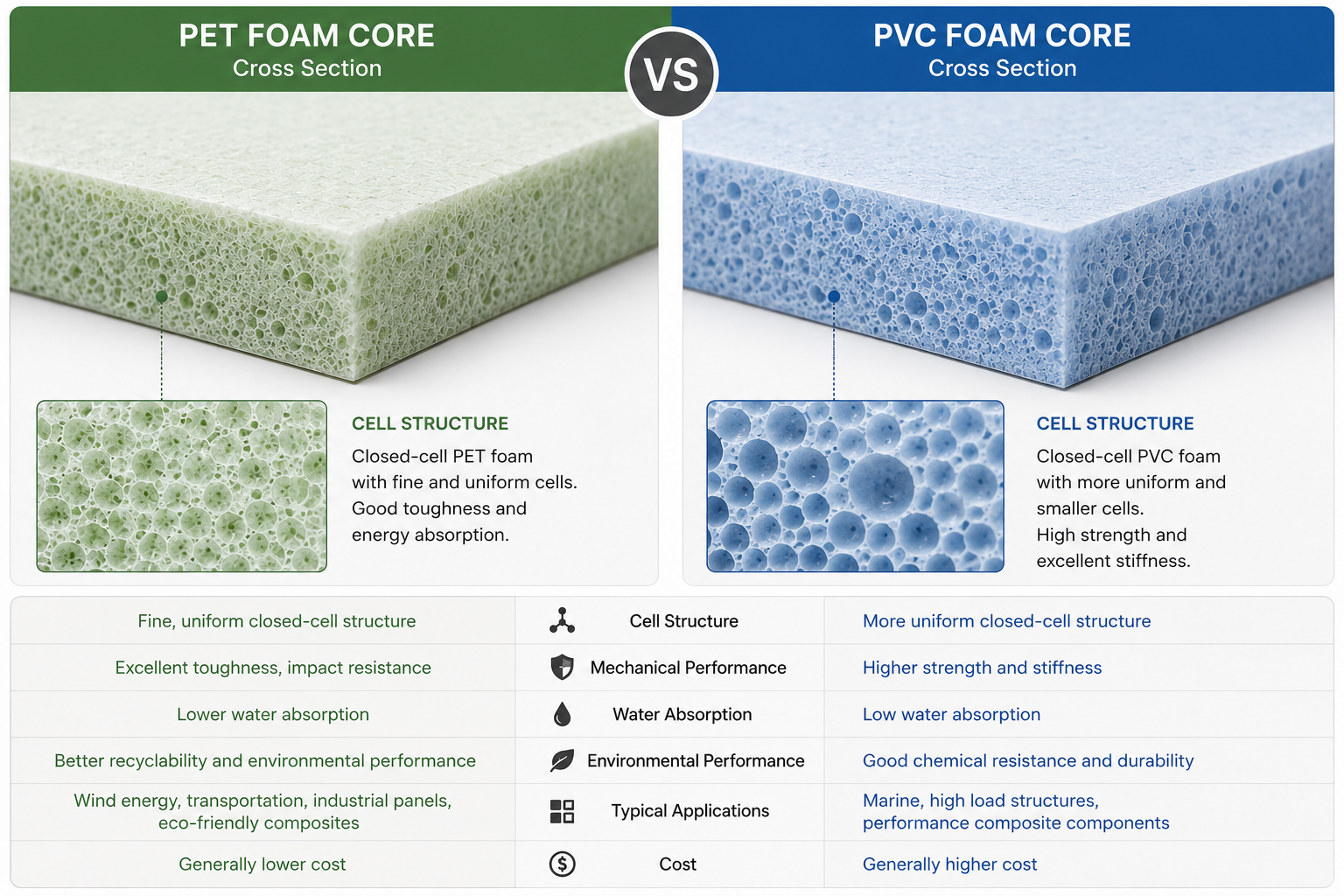
PET foam is a core material used in wind energy, transportation, and industrial panel applications. Compared to PVC foam, PET foam offers a 10–20% lower cost and consumes less energy during raw material production and recycling processing. PET foam also provides better recyclability and lower long-term maintenance cost. The mechanical trade-off is that PVC foam typically offers 20–40% higher compression strength than PET foam.
PVC foam core
PVC foam is a closed-cell structural core material that provides higher mechanical properties than PET foam and is expected to remain the dominant marine core material due to its moisture resistance (Stratview Research). PVC foam is used in marine, high-load structures, and performance composites, including high-load areas, structural sandwich panels, and wind energy components. Its compression strength is typically 20–40% higher than PET foam and 2–5 times higher than Core Mat.
Core Mat (CM)
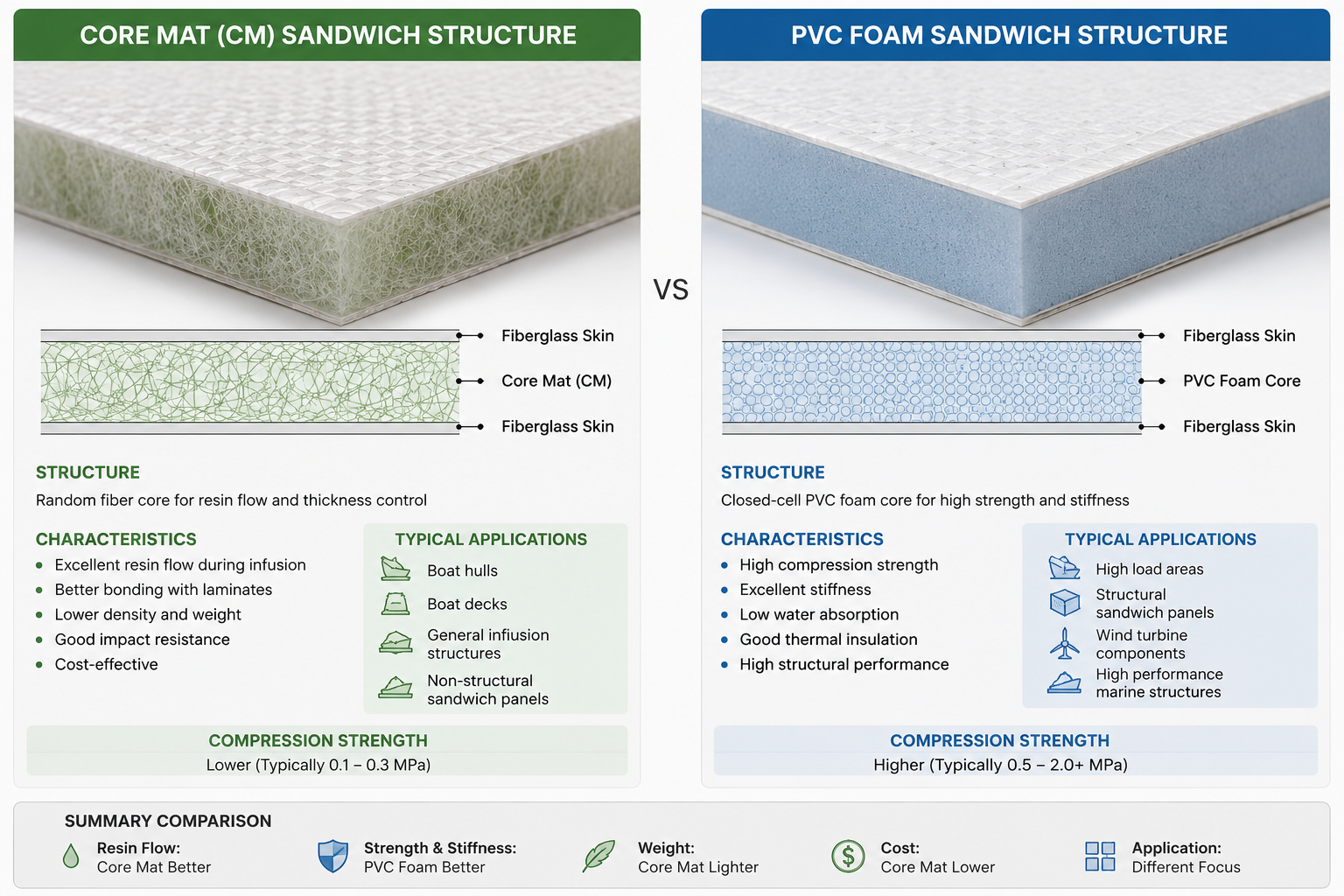
Core Mat is a core material that combines resin flow and lightweight sandwich construction. It is particularly suitable for boat hulls, boat decks, and general infusion structures. Compared to PVC foam core, Core Mat offers a 20–50% lower cost, while PVC foam typically provides 2–5 times higher compression strength. Both materials require minimal maintenance after lamination. CINON's Core Mat is positioned as an alternative solution to Soric core materials (CINON manufacturing facility description). In the wider market, Lantor Soric XF and SF are non-woven polyester cores that act as internal flow media for resin infusion, with Soric SF featuring fine hexagon cells (2–3 mm) for sharp-corner laminates (Lantor BV / Tricel Composites).
PMI foam core and aramid honeycomb core
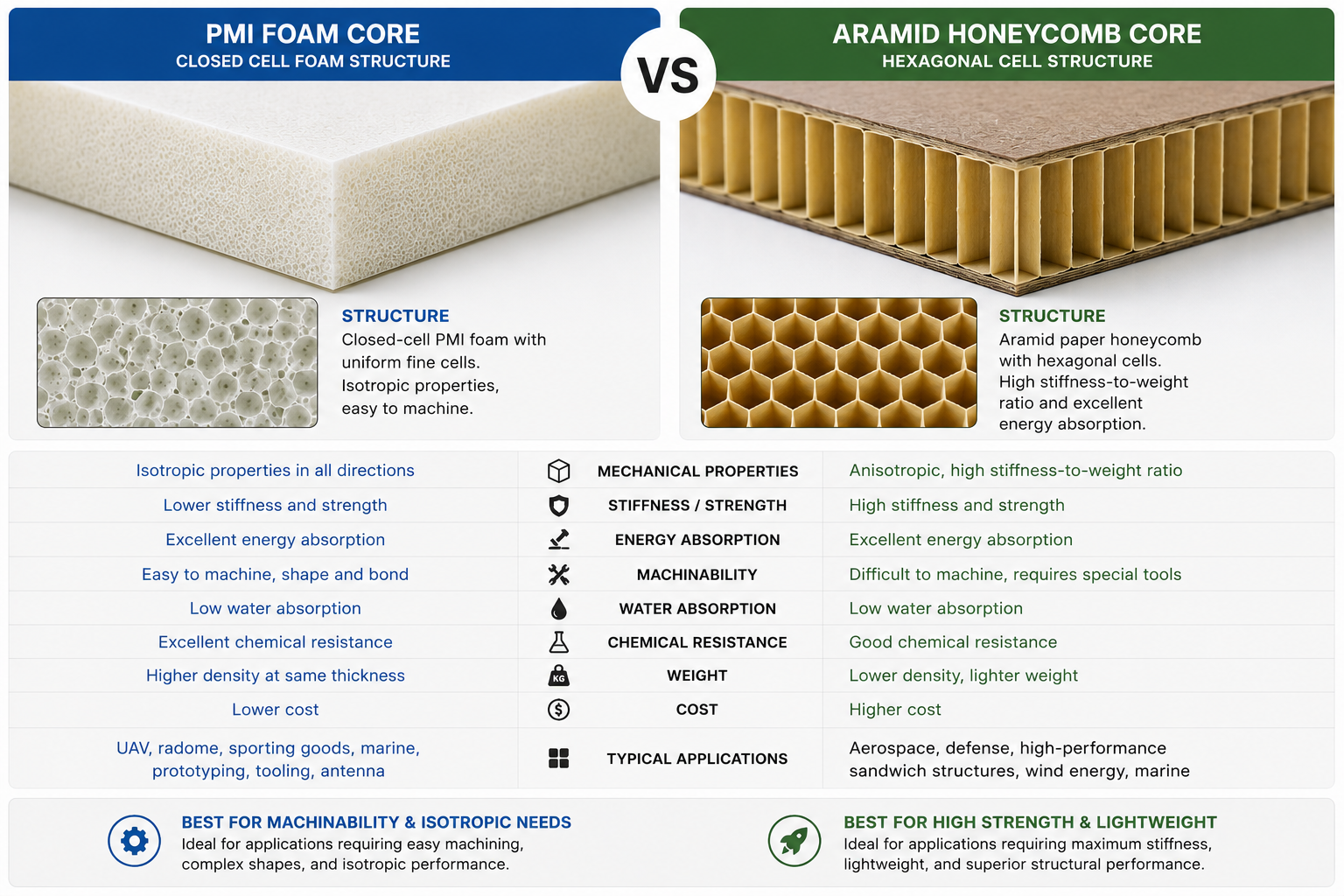
PMI foam provides isotropic properties and easy machining, which makes it suitable for UAV structures, radomes, and sports equipment. Aramid honeycomb provides a higher stiffness-to-weight ratio and is suitable for aerospace, defense, and high-end sandwich structures. Cost competitiveness between PMI foam and aramid honeycomb depends on density, thickness, and project requirements. Both materials contribute to lightweight composite structures and help reduce overall system weight.
Face-skin material context
Core selection is usually combined with face-skin selection. Fiberglass offers a 3–5 times lower material cost and better impact resistance than carbon fiber, while carbon fiber provides 2–4 times higher stiffness and lower weight. The price of carbon fiber is 12–15 times that of glass fiber. Fiberglass is used in marine, industrial, and construction applications and brings lower overall production energy consumption for mass production, with stable long-term performance and cheaper repair and maintenance costs (CINON comparison data).
Step-by-step selection for marine, wind, and transport projects
Step 1: Define the load case. For high-load areas and structural sandwich panels, PVC foam is the reference material. For general infusion structures such as boat hulls and boat decks, Core Mat is suitable. For maximum stiffness-to-weight in aerospace and defense, aramid honeycomb is the applicable choice.
Step 2: Match the material to the process. Core Mat combines resin flow with lightweight sandwich construction, which supports vacuum infusion processing. PMI foam supports parts that require machining efficiency. The manufacturing process determines which core material can be processed reliably.
Step 3: Compare cost. PET foam costs 10–20% less than PVC foam. Core Mat costs 20–50% less than PVC foam core. PET foam also consumes 20–50% less energy during production and recycling than PVC foam. If the face skin is included, carbon fiber costs 12–15 times more than fiberglass.
Step 4: Verify environmental and maintenance requirements. PET foam provides better recyclability and lower long-term maintenance cost. Core Mat and PVC foam both require minimal maintenance after lamination.
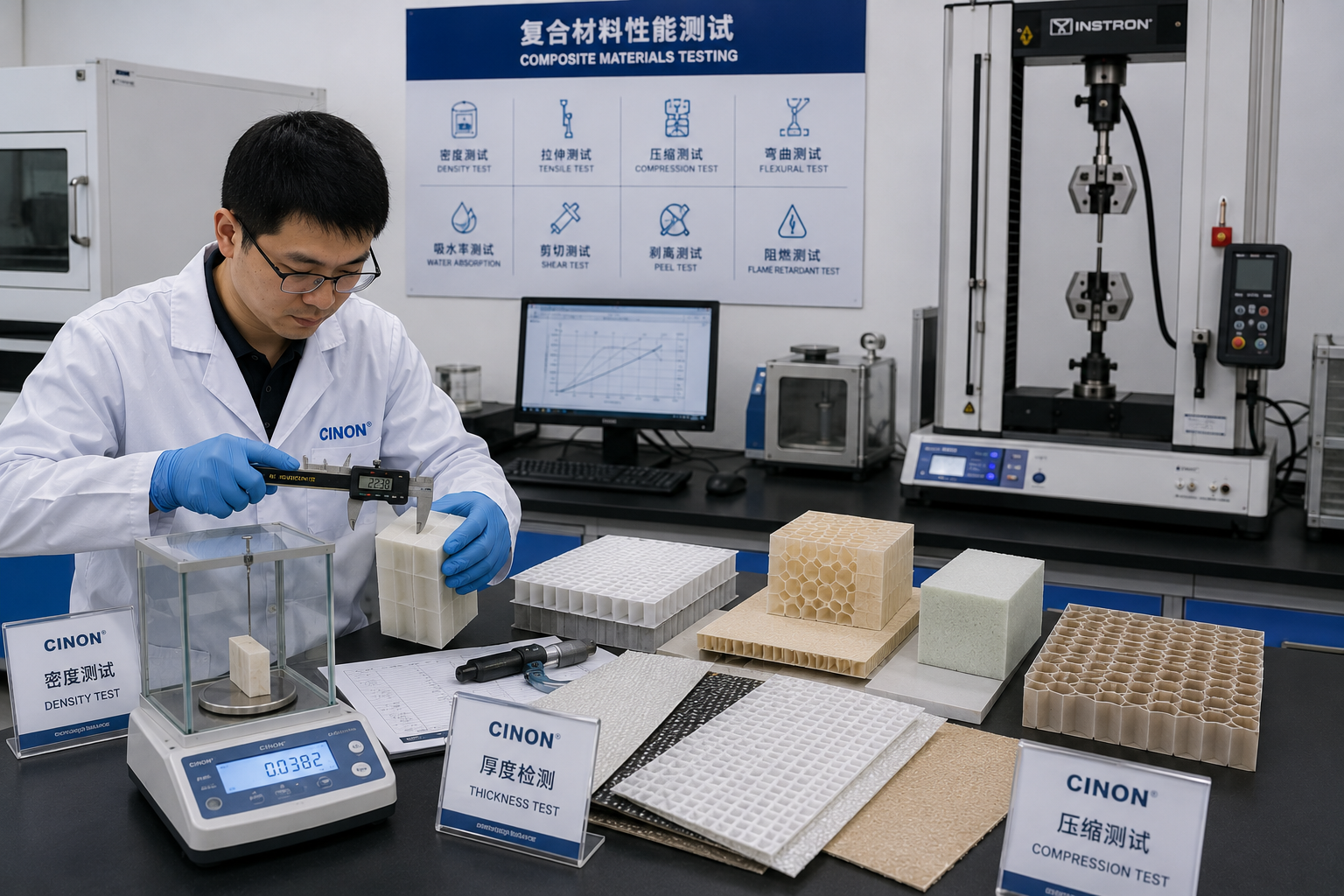
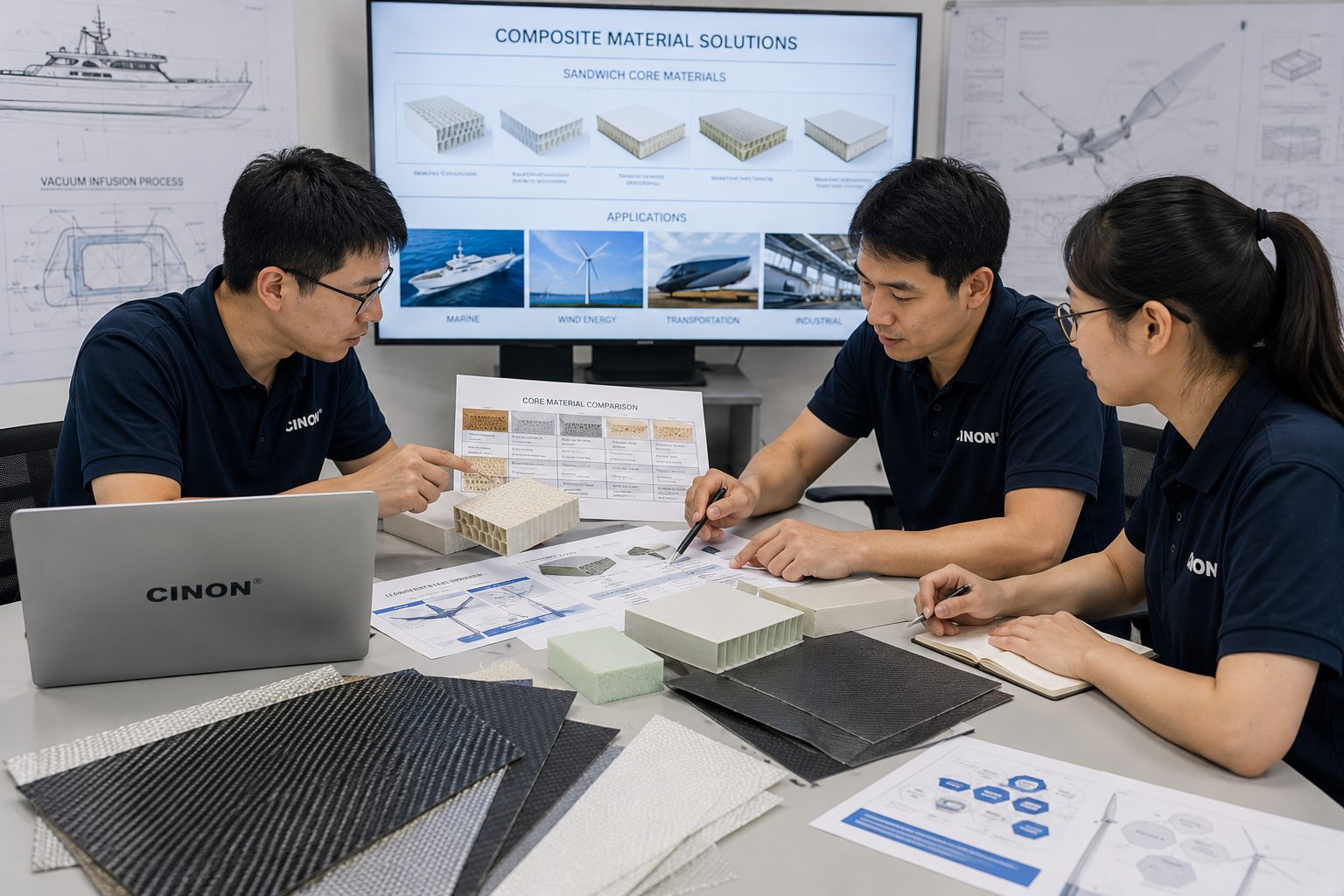
Step 5: Qualify the supplier. Before order confirmation, CINON provides engineering support to recommend suitable core materials, fiberglass reinforcements, and manufacturing processes. All dimensions, thickness, density, roll length, width, and weight are confirmed before production, and first-piece inspection is conducted before mass production. Each production batch undergoes density, thickness, weight, and appearance inspection, and test reports are available upon request. Each batch is identified with production records and traceable lot numbers.
Use cases and recommended material mapping
| Application | Recommended material | Basis |
|---|---|---|
| Boat hulls and yacht decks | Core Mat, PVC foam | Core Mat suits general infusion structures at 20–50% lower cost than PVC; PVC suits high-load structural panels |
| High-load marine structures | PVC foam | PVC is expected to remain the dominant marine core material due to moisture resistance |
| Wind turbine blades | PET foam, PVC foam | PET suits wind energy applications; PVC suits wind energy components and high-load areas |
| Transportation panels, RV panels, truck bodies, railway interiors | PET foam, fiberglass | PET suits transportation and industrial panels; fiberglass held 41.3% of RV panel material share in 2025 |
| UAV structures, radomes, sports equipment | PMI foam | Isotropic properties and easy machining |
| Aerospace, defense, high-end sandwich structures | Aramid honeycomb | Superior stiffness-to-weight ratio |
Core material comparison table
| Material | Typical applications | Performance vs PVC | Cost vs PVC | Processing and lifecycle |
|---|---|---|---|---|
| PET foam | Wind energy, transportation, industrial panels | PVC typically offers 20–40% higher compression strength | 10–20% lower cost | Recyclable; less energy in production and recycling |
| PVC foam | Marine, high-load structures, performance composites | Reference | Reference | Closed-cell structural foam; moisture-resistant |
| Core Mat (CM) | Boat hulls, boat decks, general infusion structures | PVC typically offers 2–5 times higher compression strength | 20–50% lower cost | Combines resin flow with lightweight sandwich construction; minimal maintenance after lamination |
| PMI foam | UAV, radome, sports equipment | Isotropic properties; easy machining | Depends on density, thickness, and project requirements | Suitable for parts requiring machining efficiency |
| Aramid honeycomb | Aerospace, defense, high-end sandwich structures | Superior stiffness-to-weight ratio | Depends on density, thickness, and project requirements | Contributes to lightweight structures |
Note: Market size estimates for core materials vary by source because scopes differ across structural foams, honeycomb, and all core types (industry divergence note).
Frequently asked questions
How does CINON verify core material quality and batch consistency?
CINON confirms all dimensions, thickness, density, roll length, width, and weight before production, and performs first-piece inspection before mass production. Each production batch undergoes density, thickness, weight, and appearance inspection, and test reports are available upon request. Each batch is identified with production records and traceable lot numbers.
Which core material should I choose for boat hulls and yacht decks?
For boat hulls and yacht decks, Core Mat is suitable for general infusion structures and offers a 20–50% lower cost than PVC foam core. PVC foam core is the better choice for high-load structural sandwich panels because it typically provides 2–5 times higher compression strength. PVC is expected to remain the dominant marine core material due to moisture resistance, but the final choice depends on the load case and cost target. CINON provides engineering support to recommend suitable core materials before order confirmation.
How much can I save by choosing PET foam or Core Mat instead of PVC foam?
PET foam typically costs 10–20% less than PVC foam and consumes less energy during raw material production and recycling processing. Core Mat offers a 20–50% cost reduction compared to PVC foam core. Both materials require minimal maintenance after lamination. The trade-off is compression strength: PVC foam typically provides 20–40% higher compression strength than PET foam and 2–5 times higher compression strength than Core Mat.
Can I request samples and test reports before placing an order?
Yes. CINON provides test reports upon request for each production batch, covering density, thickness, weight, and appearance. Sample requests can be directed to [email protected] or WhatsApp +86 135-8036-3674. The CINON catalog with the full product range is also available for download.
What lead times and export terms does CINON offer?
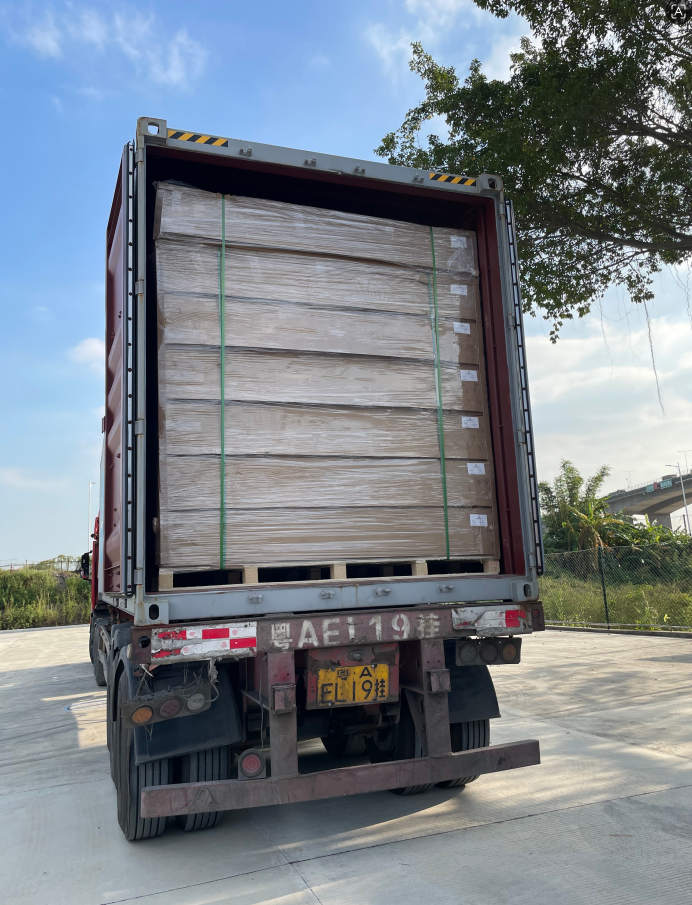
CINON uses production planning and inventory management to maintain stable lead times for regular products and urgent projects. Products are packed with reinforced pallets, moisture-proof wrapping, corner protection, and export-standard packaging to prevent transportation damage. For current lead times, a quotation, or a delivery schedule, contact [email protected] or call +86 186-2098-8848 with your project specifications.
Conclusion
No single core material fits every project. PET foam is the lower-cost, recyclable choice for wind energy, transportation, and industrial panels. Core Mat is the 20–50% lower-cost infusion core for boat hulls, boat decks, and general infusion structures. PVC foam remains the mechanical benchmark for marine and high-load parts. PMI foam and aramid honeycomb serve the high-performance aerospace end of the market.
CINON Composites (Guangdong Cinon New Material Technology Co.,Ltd) supplies PET foam core, PVC foam core, PMI foam core, Core Mat, PP honeycomb, aramid honeycomb, and fiberglass reinforcements from a 40,000 m² facility in Guangzhou, with an annual output of 1,200,000 m² and 100% of exports going to Europe, North America, and Asia-Pacific markets. Its 25-engineer R&D team supports customers with material selection and process optimization for vacuum infusion and lightweight structures.
Get a sample or quotation
Contact Waylon: [email protected] | Tel: +86 186-2098-8848 | WhatsApp: +86 135-8036-3674
Have Questions or Need More Details?
Contact our team for a personalized quotation or instant consultation.
Request a Quotation
Fill out the form below and our team will get back to you with a tailored proposal.
WhatsApp Direct Chat
Prefer to chat in real-time? Message us on WhatsApp for instant assistance & quick answers.
- Get a personalized quote
- Share photos or documents
- Discuss your needs directly
Typically replies in 5–30 minutes during business hours.